[ccfic]
Holme Heath is part of the Povington and Grange heaths SSSI, southwest of Wareham and including the East Holme Rifle Range, although the SSSI does not cover the range itself. It was cleared of trees and braken around 15 years ago and despite considerable gorse and rhododendron, provides a variety of habitats that usually piques the interest of Bryologists. Perhaps the most unusual of which is the area at the back of the rifle range, above the berm, where spoil has been accumulated over many years containing large quantities of spent bullets.
The Purbeck Bryology group visited the site twice in 2024. A total of 73 species were identified across the two visits, a good number and reflecting the diversity of habitats and general condition of the site. Below are the two visit reports followed by some bryological notes.
Please be aware that this site includes an active rifle range. The group obtained permission to visit at specific times. Do not visit this site without obtaining permission.
Please read the note on content licensing at the end of the article.
Thursday 17th October 2024
Jim White
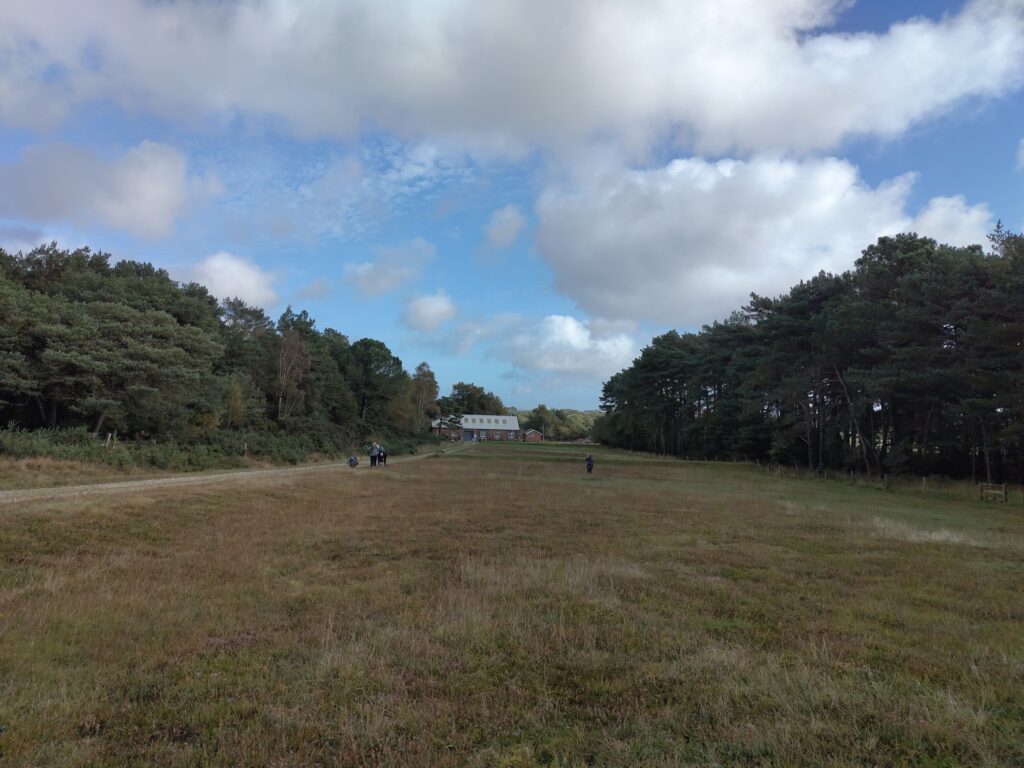
The Bryo-group – seven of us this week – had special access to Holme Rifle Range, a site unknown to us for its mosses and liverworts. The weather was certainly very kind, with a light breeze and increasingly warm sunshine for most of the day. Would there be any surprises from the variety of habitats present: mown grassy heath; range-side track with calcareous surfacing; fringing heath; notably, a shaded humid ditch; scrapes (currently watery from so much recent rain); mire; and bare patches in the wet heath, affected over time by the deposition of spent rifle shells?
The heathy grassland of the range turf is generally dense, limiting the bryological component to a few robust spp, such as Pseudoscleropodium purum, Rhytidiadelphus squarrosus and Dicranum scoparium. Shorter, finer turf occurs in places, such as on the top of rifle butts, and here smaller mosses can occur, including Fissidens taxifolius, Plagiomnium affine, Brachythecium albicans, Bryum capillare, Polytrichum juniperinum and P piliferum. There is a greater diversity of mosses along the fairly lightly-used track on the N side of the mown range. This modified heath habitat, both in the stoney track and in its fringes, affected by calcareous dust perhaps, supports some mosses not typical of standard heathland sites, including Didymodon fallax, Dicranella varia, Streblotrichum convolutum, Barbula unguiculata, Trichostomum crispulum, Hypnum cupressiforme var lacunosum, Calliergonella cuspidata, Bryum pseudotriquetrum, Syntrichia ruraliformis and Homalothecium lutescens. The very infrequently Dorset-recorded Kandea elodes also occurs here, along with more regular heath spp such as Camplylopus introflexus, Ceratodon purpureus, and Hypnum jutlandicum, and the characteristic track moss Archidium alternifolium.
A couple of metres N of the track is an old ditch line, heavily shaded by overhanging heather and with steep banks cut into clay. This humid site, supports an array of liverworts including Calypogeia fissa, C muelleriana, C arguta, Cephalozia bicuspidata, C connivens, Lophocolea heterophylla, L bidentata, Diplophyllum albicans, and Riccardia chamedryfolia, along with the less frequently found Solenostoma gracillimum and Odontoschisma francisci, and on a rotten log Riccardia palmata. The ditch also holds several Sphagna, such as Sphagnum compactum, S tenellum and S auriculatum. Bare clay exposure also occurs beside a scrape just to the N of the range and, as well as some of the bryos listed, also has Pogonatum aloides, Fossombronia incurva, and on a small knoll within a small streamlet, Atrichum crispum (This moss, if confirmed, would be new to Dorset). At the end of the range, again in a trickle of water is Cratoneuron filicinum and on open damp sandy gravel Pseudocrossidium hornschuchianum.
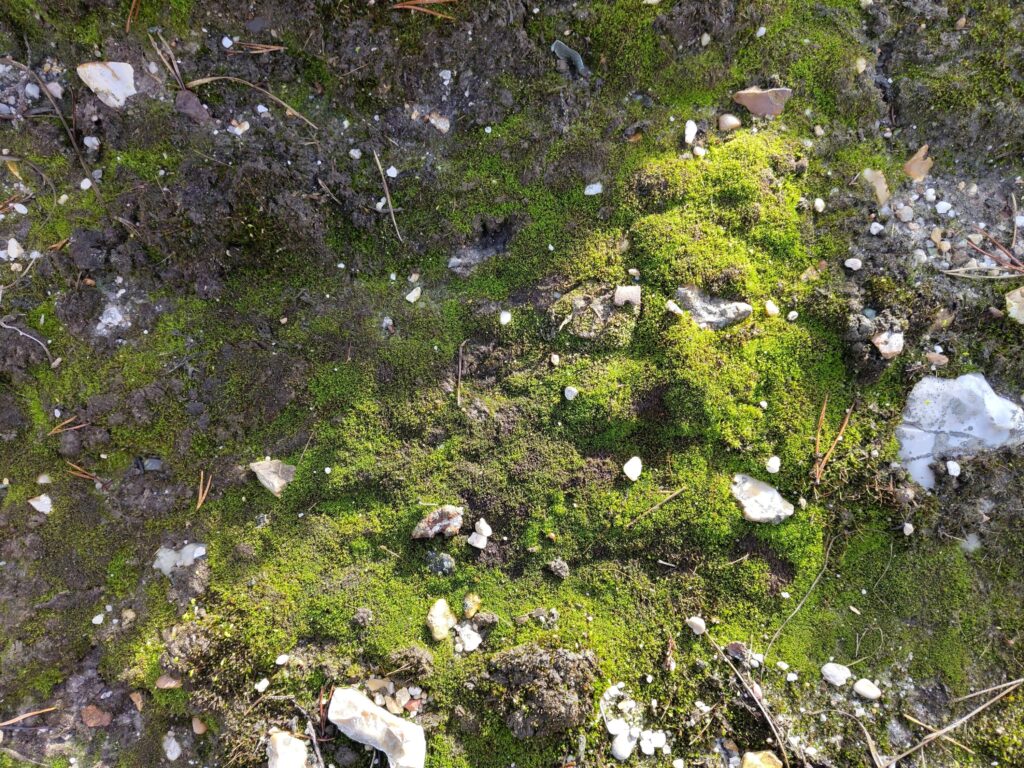
Just beyond the final bank of the range is an area of damp heath with much bare peaty gravel. This area is probably affected by long-term deposition of shooting waste including shell cases. This contamination has locally killed or suppressed much vascular plant growth, notably Molina, leaving the remains of tussocks. While there is a good deal of open, unvegetated ground, the bryophyte cover is much more evident, on peaty patches and moribund tussocks. Several Pohlia spp occur here – P annotina, P nutans and P melanodon. Although none of the spp noted is particularly typical of metal-contaminated sites, Cephaloziella divaricata is noted as being found, among other habitats, on metalliferous mine waste. It forms dense mats here, which despite its very small size are relatively conspicuous, also providing a niche for liverworts such as Riccardia multifida. Several other liverworts from the earlier locations occur here, as well as Fossombronia foveolata. The lack of competition from vascular plants and the constant humidity from the seeping peaty soil are probably factors favouring the bryophytes.
Thurs 12th December 2024
Jim White
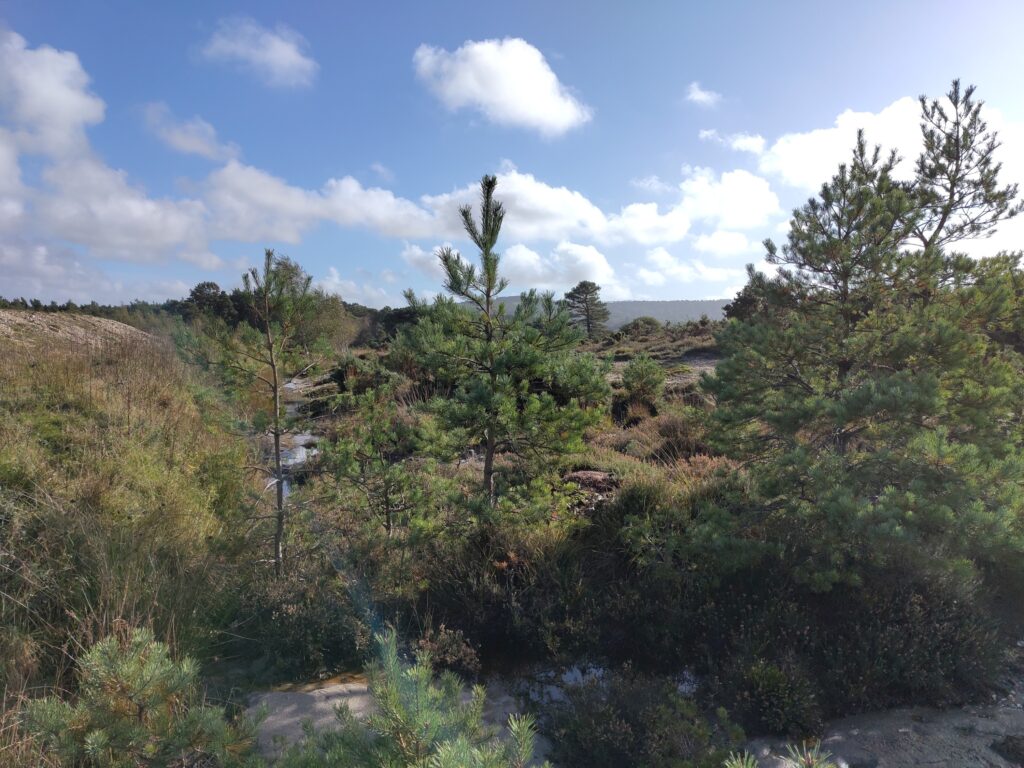
Having wrestled with bryos of calcareous habitats over the past couple of excursions, we (a band of eight moss hunters today) reverted to acidic conditions – the wet heath and small mire area SW of the rifle range butts at Holme. The forecast was accurate and we had a dry day, if consistently grey and with an equally determined chilly NE wind.
To reach today’s sites meant passing the area of damp, stony sand with substantial open patches affected by metal contamination, and saw again several of the bryos that seem to cope well with these conditions, or at least the lack of competition from other vegetation. These include Ceratodon purpureus, Solenostoma gracillimum, Cephaloziella divaricata, Pohlia annotina, and a Fossombronia that might be coaxed into producing a ripe capsule and spores, that would enable confirmation. In the grassy fringes of the open patches, Kindbergia praelonga and Pseudoscleopodium purum are frequent along with some rather untypical Thuidium tamariscinum.
Water feeding the small mire originates from seepages emerging at the foot of Holme Mount, where the neighbouring habitat is dry heath, some recently cleared from dense gorse and young pine. Typical bryos here include Campylopus introflexus, C pyriformis, Hypnum jutlandicum, Polytrichum juniperinum, Dicranum scoparium, and covering the ground of a couple of bonfire sites, a dense turf of Funaria hygrometrica with smaller amounts of Streblotrichum convolutum, Bryum argenteum and B dichotomum.
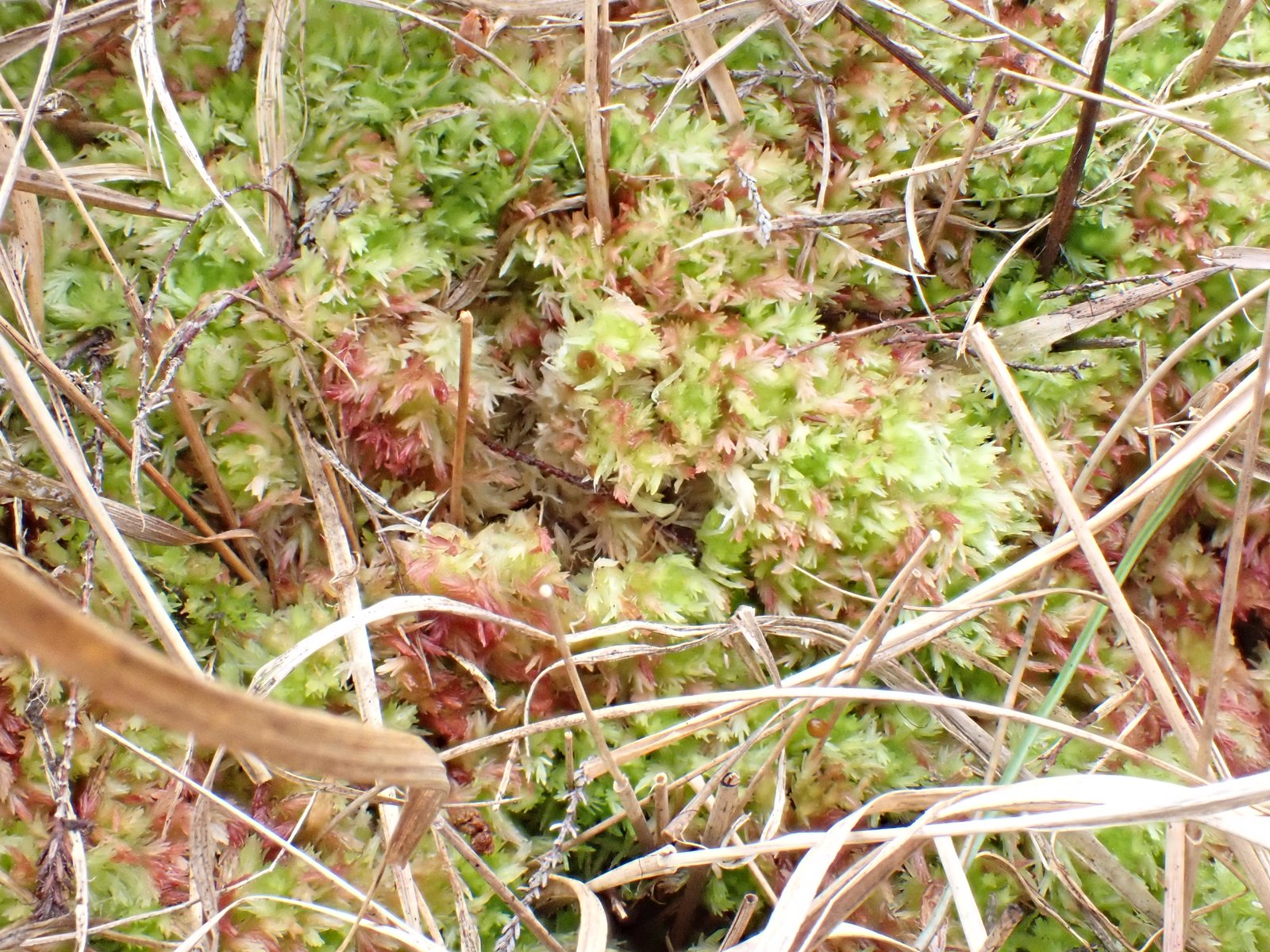
The remaining surrounds of the perched mire are wet heath, and bryos here include some Sphagnum compactum, much S tenellum, and several solid hummocks of Leucobryum glaucum. Molinia tussocks occur in places, and support on their shaded humid sides further spp such as Calypogeia fissa C arguta, Diplophyllum albicans, Cephalozia bicuspidata, and C connivens. Some of these spp also grow amongst other bryos of the mire, along with Kurzia pauciflora Odontoschisma sphagni and O fluitans. Further Sphagnum spp, especially in the mire area include S cuspidatum, S auriculatum, S subnitens, S pulchrum, S papillosum, S palustre, and S rubellum. In the wet heath/mire transition a single patch of Sphagnum molle occurs, while in another transition spot there is a small population of Odontoschisma denudatum. Riccardia chamedryfolia also occurs locally where wet peat is exposed. Where the water trickles from the mire into a ditch bordering the incongruous lurid green reclaimed grassland to the S, a small channel cut into clay provides habitat for Atrichum undulatum, Pellia epiphylla and Dicranella heteromalla.
No huge surprises then, but a good range of typical spp and several we do not see that often. (That said, for most lowland sites, other than New Forest, such a list would seem remarkable!). This site is also delightfully remote, and our lunch stop on the steep slope of Holme Mount provided fine views of the high skyline of Purbeck Ridge: The long expanse of Great Wood; Creech Barrow, Stonehill Down; Norden Wood and Nine Barrow Down – all in very muted if not sombre, winter light.
This work is licensed under a Creative Commons Attribution-NonCommercial 4.0 International Licence. You are free to share and adapt this material for non-commercial purposes, provided you give appropriate credit, provide a link to the license, and indicate if changes were made.