[ccfic]
By Peter Robertson, Mark Singleton and Jake Hancock
Wood pasture is a “mosaic habitat” which encompasses a mixture of trees, open habitats and livestock grazing. The open habitat can be species-rich grassland or heathland, while the tree component can range from scattered scrub patches to individual veteran trees. Grazing is the final part of the mix, helping to maintain a balance between open and wooded habitats.
Together, these elements contribute to what is considered one the one of Britain’s richest habitats. Wood pasture provides a wide range of pollen and nectar sources, standing and fallen deadwood, and dung. These features, in turn, support an extremely diverse range of plants, insects and fungi. They also provide habitat for a variety of wildlife, including high densities of small mammals and birds such as Spotted Flycatcher and Lesser Spotted Woodpecker.
Across the Purbeck Heaths NNR, significant effort has been made over the last few years to convert areas to wood pasture:
| Land Manager | Site Name | Area (ha) |
| RSPB | Arne | 20 |
| RSPB | Grange Heath | 2 |
| National Trust (in-hand) | Hartland, New Line, Langton Wallis, Corfe, Weston, Westwood & Greenlands | 206 |
| National Trust Tenants | Spyway, Wilkswood, Whitecliff and Acton | 130 |
| Wessex Conservation Grazing | Middlebere Farm | 66 |
| TOTAL | 424 |
Table: Areas of Land in Wood Pasture Creation Across the Purbeck Heaths NNR
Different approaches are being taken to wood pasture creation by the various land managers. This is likely to result in slightly different habitat types developing across the landscape, while also providing valuable opportunities to learn from each other’s experiences.
Wood pasture creation at RSPB Arne
At RSPB Arne, 20 hectares of wood pasture is being created on the improved pasture of the Arne Farm fields. This will link and extend existing woodland blocks and belts across the reserve.
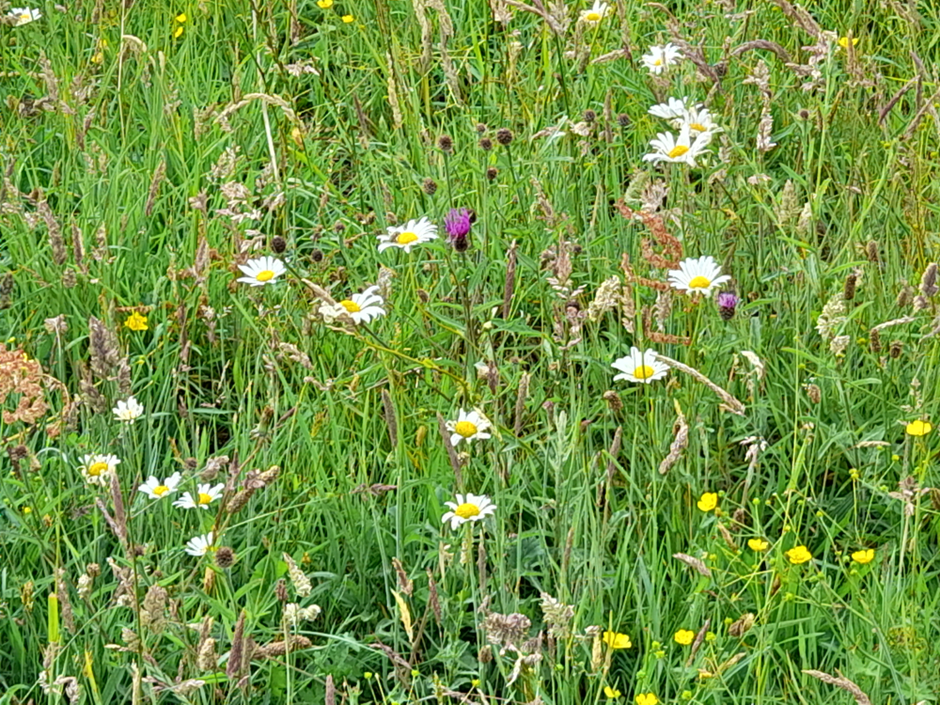
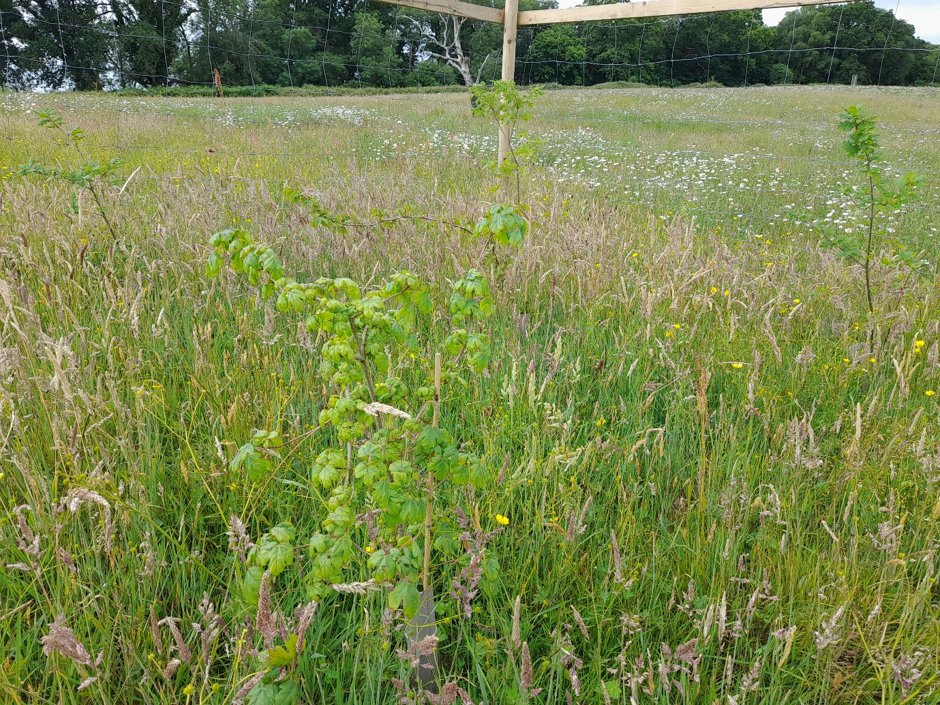
Because the grassland was relatively species-poor, we began the process of habitat creation by putting pigs into the fields for a couple of months to turn over the ground and create a seedbed. We then spread a locally harvested acid grassland wildflower seed mix across the fields to create a more species-rich grassland. As well as creating a seedbed for grassland establishment, the pigs also created a very varied micro-topography (also known as a bumpy mess!).
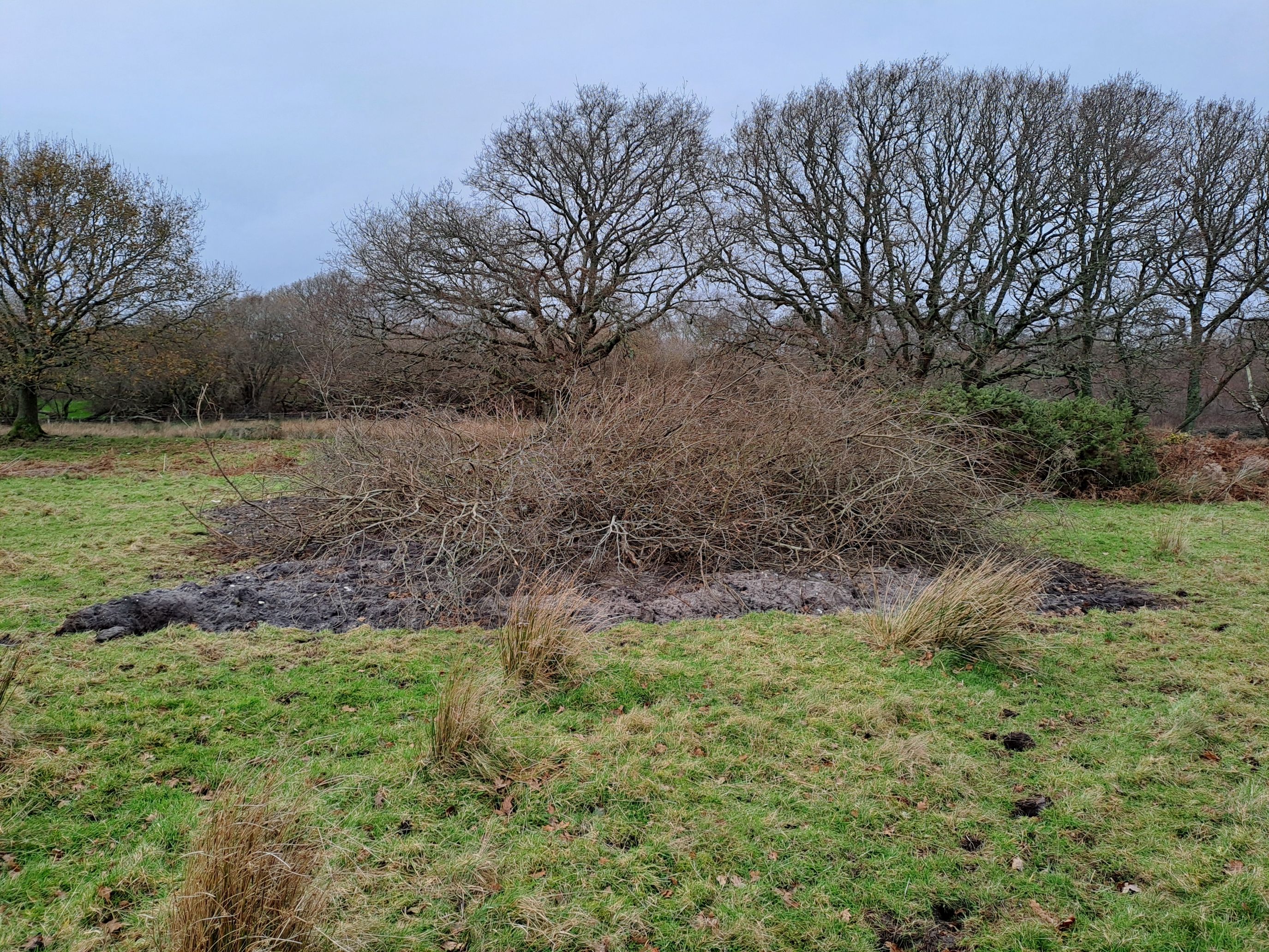
We are aiming to allow natural regeneration to do most of the work of establishing trees and scrub, but have kick-started this process through a number of 4 m x 4 m deer exclosures containing planted tree whips, as well as a small number of standard trees protected by tree guards. We have also created brash piles across the fields to protect newly established tree seedlings from deer and cattle grazing.
The fields will be cattle-grazed each winter to maintain the open habitat and introduce dung into the system.
We will closely monitor how the new habitat develops, particularly tree establishment, and then decide whether we need to adapt the plan to encourage more tree and scrub growth or continue to rely primarily on natural regeneration. Deer browsing pressure presents a significant challenge to natural regeneration across the Purbeck landscape and, while evidence suggests that natural regeneration can create particularly wildlife-rich woodlands, it is not always possible to achieve this ideal.
Wood pasture creation at Middlebere Farm
We took on the 140 ha farm in 2023 and immediately entered it into Countryside Stewardship (CS), an agri-environment scheme in England that provides funding to farmers, landowners and land managers to improve the environment alongside agricultural production. The farm is roughly divided between previously farmed land and areas of saltmarsh, reedbed and low-lying grassland adjacent to tidal habitats.
We entered the higher and drier heart of the farm into the WD6 Wood Pasture Creation option, covering a total of 66 ha. Approximately 15 ha of this area consisted of existing plantation woodland dominated by pine, oak and sycamore.
Our approach has been to play a very active role during the initial years, with a view to transitioning towards more natural processes in years five to six and beyond. To establish a more species-rich grassland, we harvested seed from a local wildflower meadow and power-harrowed it into approximately 30 ha of the WD6 area, a technique that has proved highly successful.
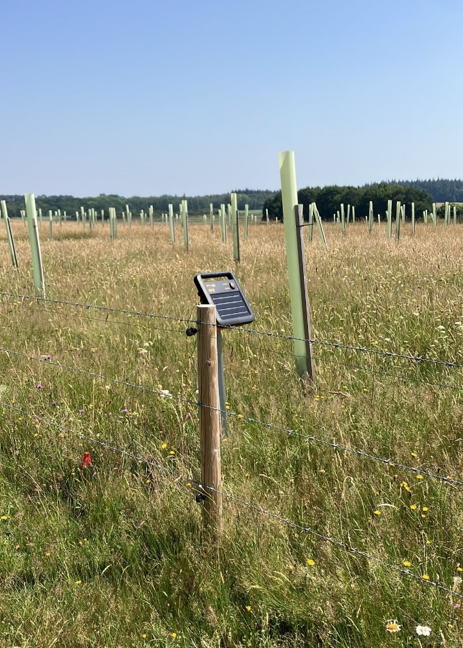
Using funding from the Woodland Trust, Farming in Protected Landscapes (FiPL) and Countryside Stewardship, we have planted 10,000 trees over the past two years. Most of these have been planted within grazing exclosures and protected using Tubex shelters, although some have been established using TE8 tree guards. A broad range of tree species has been selected, avoiding those already well represented on the farm, with the aim of introducing the widest possible variety of nectar and seed sources.
We have also used FiPL funding to thin approximately 20% of the existing plantation woodland, creating glades and rides while generating timber for brash piles in the neighbouring grassland. The funding enabled timber to be extracted to the woodland edge, after which the farm used its own machinery and time to create the brash piles. Many of these were established on ploughed plots funded by the National Trust.
To further enhance these areas, we used a tractor-mounted grab to transplant bramble into the brash piles. This proved straightforward and successful, even during a dry summer. The next phase of the project will involve creating ponds and scrapes in the wetter and lower-lying areas of the wood pasture, further increasing habitat diversity. We have also introduced ponies and pigs to graze alongside the cattle, helping to create a more varied grazing system and habitat structure.
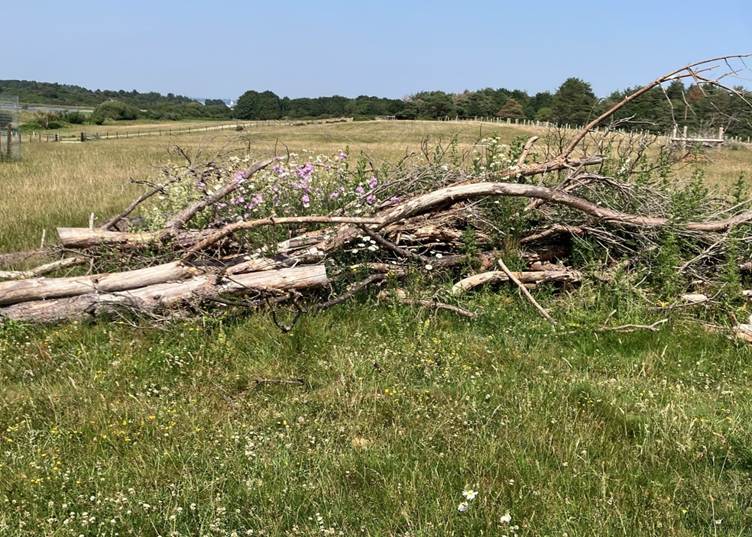
A natural brash pile at Middlebere Farm (Image: Jake Hancock)
Wood pasture creation by National Trust
The National Trust is establishing new areas of wood pasture across former pasture and semi-improved grassland using a principles-led, adaptive approach that prioritises natural processes while responding to local constraints. Land entered into the Countryside Stewardship WD6 Wood Pasture Creation option is being restored to a dynamic mosaic of open grassland, scattered scrub and open-grown trees, delivering long-term benefits for wildlife, landscape character and sustainable grazing.
Our approach follows a clear three-step natural regeneration hierarchy. Natural regeneration is the preferred mechanism wherever possible; however, where isolation from seed sources or ongoing grazing pressure from livestock or deer would slow establishment, we proactively “give nature a hand”.
This includes temporary reductions in grazing intensity, targeted disturbance of the grass sward using pigs or cultivation, and the creation of small scrub islands protected by brash or simple stock and deer exclosures. These features provide shelter from grazing, act as wildlife refuges and form future nuclei for tree establishment and seed dispersal.
We have also ploughed 10 m x 10 m bare-ground plots (see image below) to break up dense grass swards and allow easier scrub and tree establishment. During last year’s drought, we found that tree whip survival was higher in these cultivated areas.
Using the adage “thorn is the mother of all oaks”, we are undertaking bramble planting and translocations into these bare-ground plots. We have also worked with the local community, particularly schools, to carry out “hedgerow harvesting”, collecting seed in autumn and scattering it into the plots.
Tree and scrub planting will be the final stage, primarily within developing scrub patches, to increase structural and species diversity and ensure appropriate tree densities are achieved. Species are selected to reflect local landscape character and ecological function, providing pollen, nectar, fruit and the potential to develop future veteran trees.
Grazing by cattle remains central to the system, maintaining the balance between open and wooded habitats while supporting nutrient cycling and seed movement. Stocking levels and grazing patterns will be regularly reviewed, with ongoing monitoring guiding adaptive management.
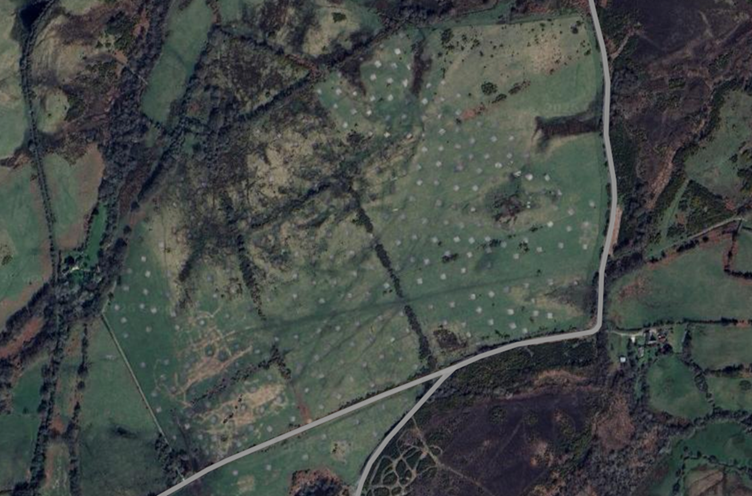
Google Maps image of 10 m x 10 m plots at Hartland
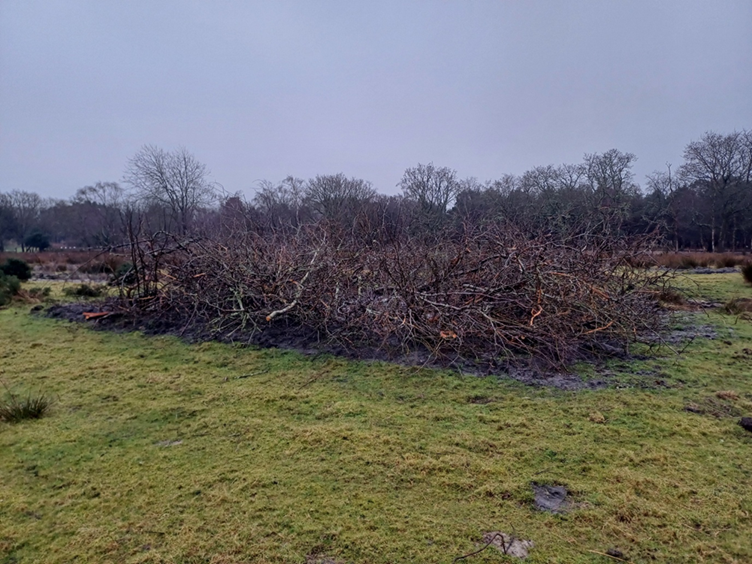
Example of a protective brash pile at Halfway Fields (Image: Mark Singleton)
Monitoring and Adaptation
Individually and collectively, we will monitor the success of the different approaches being taken to wood pasture creation, learning from each other’s successes and failures. We are currently thinking about how the PNHF can help with this. We expect the exact nature of the habitats created in different areas to vary, ranging from more open grassland with individual trees to larger areas of scrub interspersed with grassland.
What they will have in common is that they will be structurally diverse, species-rich habitats that support a wide range of insects, plants and fungi, adding to the already outstanding wildlife value of the Purbeck landscape.