[ccfic]
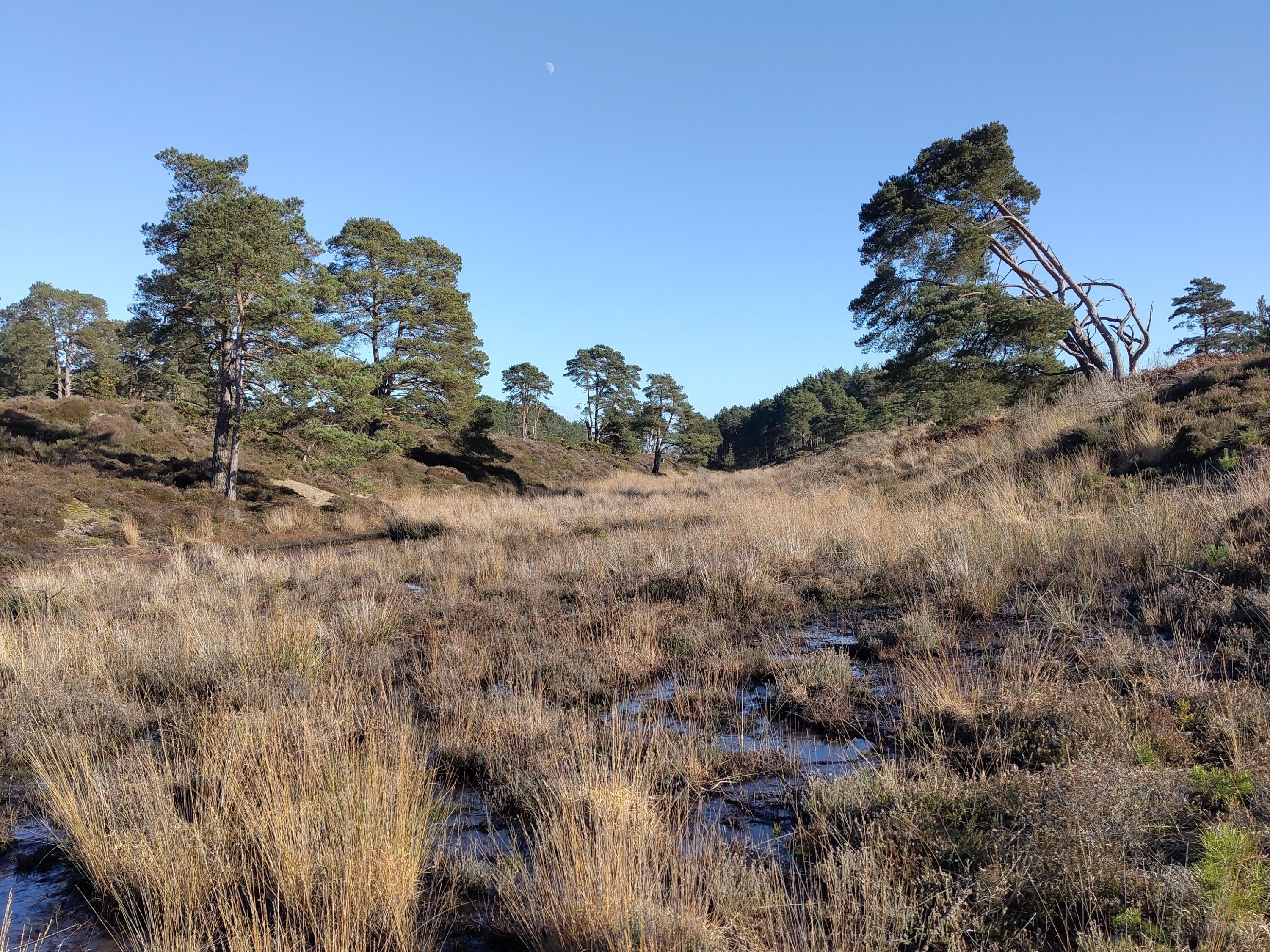
On Thursday 6th February 2025, the Purbeck Bryology Group visited Newton Gully on Newton Heath, part of the Purbeck Heath NNR. Although they only recorded 40 species, the site held some unexpected finds.
Two weeks in succession with a very fine Thursday! Today was sunny from the start, following an o/n frost and with a brisk E wind, so rather chilly, but this week’s seven moss hunters were well prepared. The open, unshaded site allowed the warmth of the sun to lift the frost quickly enough and made for pleasant conditions, apart from the inevitable deep shadow contrast that is always a problem searching for small features (and hazards!) at ground level. Our venue this week was heathland around part of Newton Gully, on the Rempstone estate and within the PHNNR. It had been within our view last week from King’s Wood, but the habitat and thus species recorded here were totally different. The Gully is a former ball clay working in the heathland, from which clay was dug since the first half of 1800s until mid-1900s. It would have had a railway along the base when active, first horse-drawn and later steam, with clay being transported to Goathorn pier for shipment to Poole and beyond. There remains much bare clay, even after such a long period, especially along the exposed S-facing slope, with the shaded and more humid N-face more vegetated and with frequent seepages.
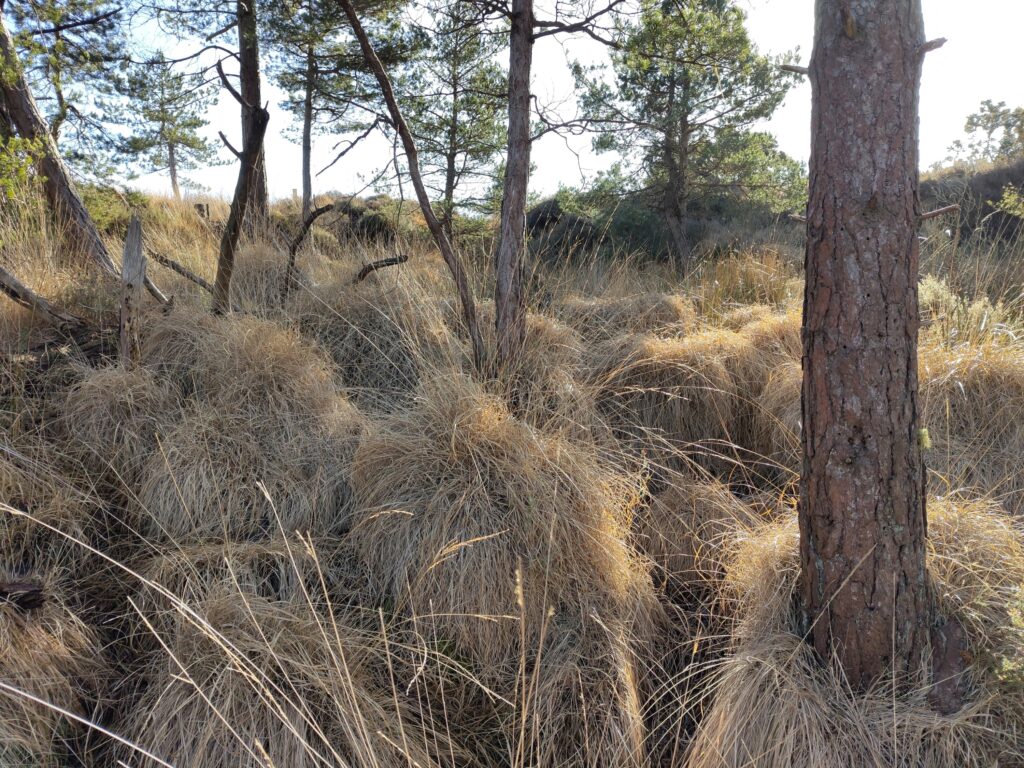
Much of the surrounding heathland had been planted with conifers, but more recent heathland restoration has kept the gully and its immediate vicinity largely open. There are typical and widespread heathland and woodland bryos such as Hypnum jutlandicum, Dicranum scoparium, Polytrichum formosum, Polytrichum juniperinum, Pseudoscleropodium purum, Brachythecium rutabulum, Kindbergia praelonga, Calliergonella cuspidata, Bryum capillare, Dicranella heteromalla, Campylopus pyriformis and Campylopus introflexus. Also present are several less routinely encountered heathland spp such as Pleurozium schreberi, Leucobryum albidum, and Polytrichum piliferum. Probably with the influence of base-rich drainage from the roadway (old clay tramway), the moss Bryum pseudotriquetrum occurs locally.
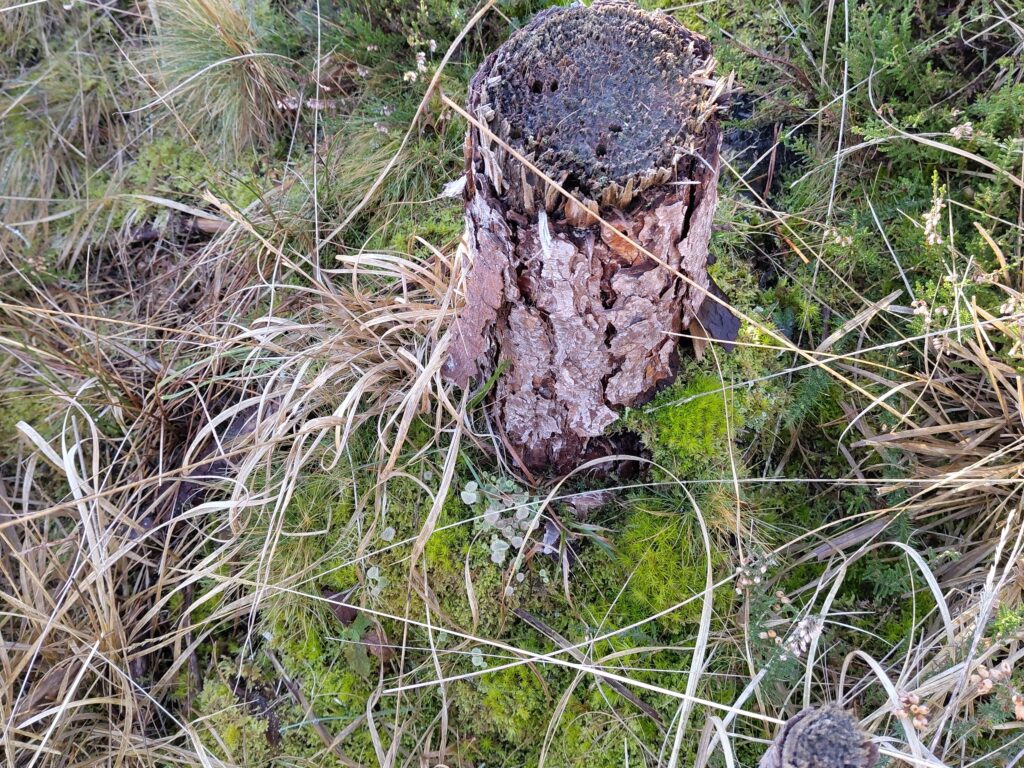
Humid, sheltered habitats, such as heavily shaded vertical faces in the clay, support several liverworts including Calypogeia fissa, Calypogeia muelleriana, Calypogeia arguta, Cephalozia bicuspidata, Cephalozia connivens, Cephaloziella divaricata, Lophocolea bidentata, Diplophyllum albicans and Odontoschisma fluitans. There is no expanse of typical mire in this locality but several Sphagna occur, associated with the permanently damp conditions of seepages, or wet trackways. These include Sphagnum auriculatum, Sphagnum cuspidatum, Sphagnum palustre, Sphagnum fimbriatum, Sphagnum fallax, Sphagnum subnitens, Sphagnum compactum and Sphagnum tenellum.
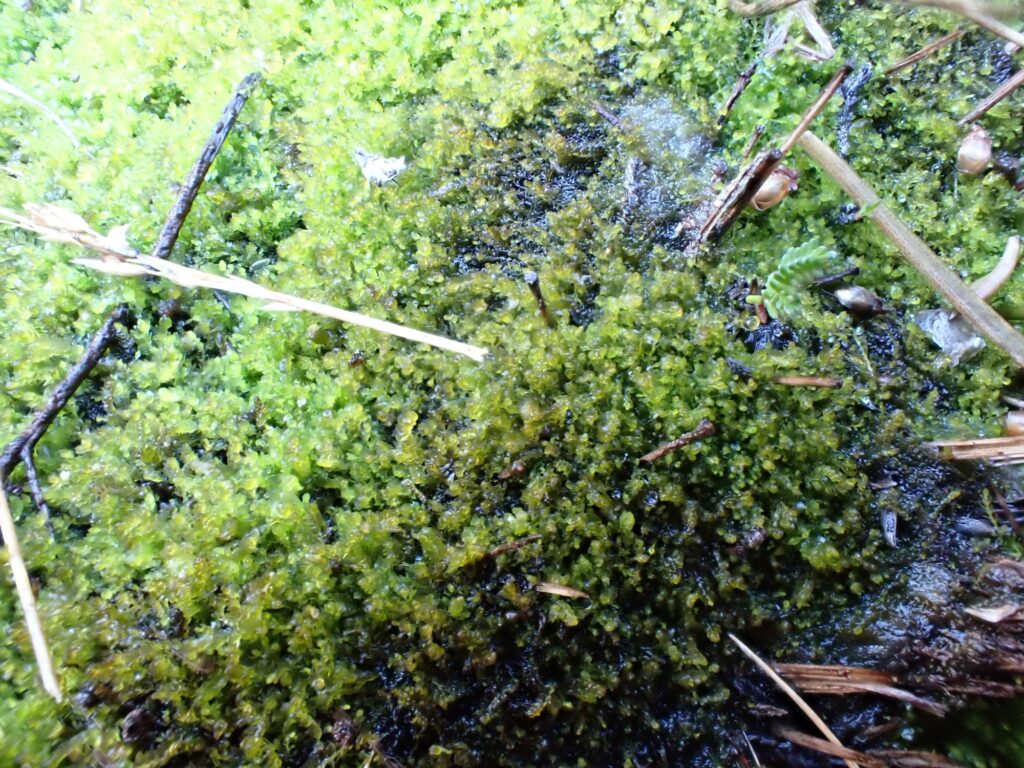
A couple of old bonfire sites, where brash from conservation pine clearance has been burnt, support a characteristic community with abundant Funaria hygrometrica along with Ceratodon purpureus and Bryum dichotomum. Damp rotting wood supports Orthodontium lineare and very locally the scarce liverwort Riccardia palmata. There is a notable abundance of Gymnocolea inflata on wet clay surfaces and in one spot along the moist, shaded N-facing ‘cliff’, a patch of the liverwort Scapania irrigua. This is only recorded in Dorset from a handful of sites, none at all recently, and with the only record of this species from the Purbeck Heaths in 1933!
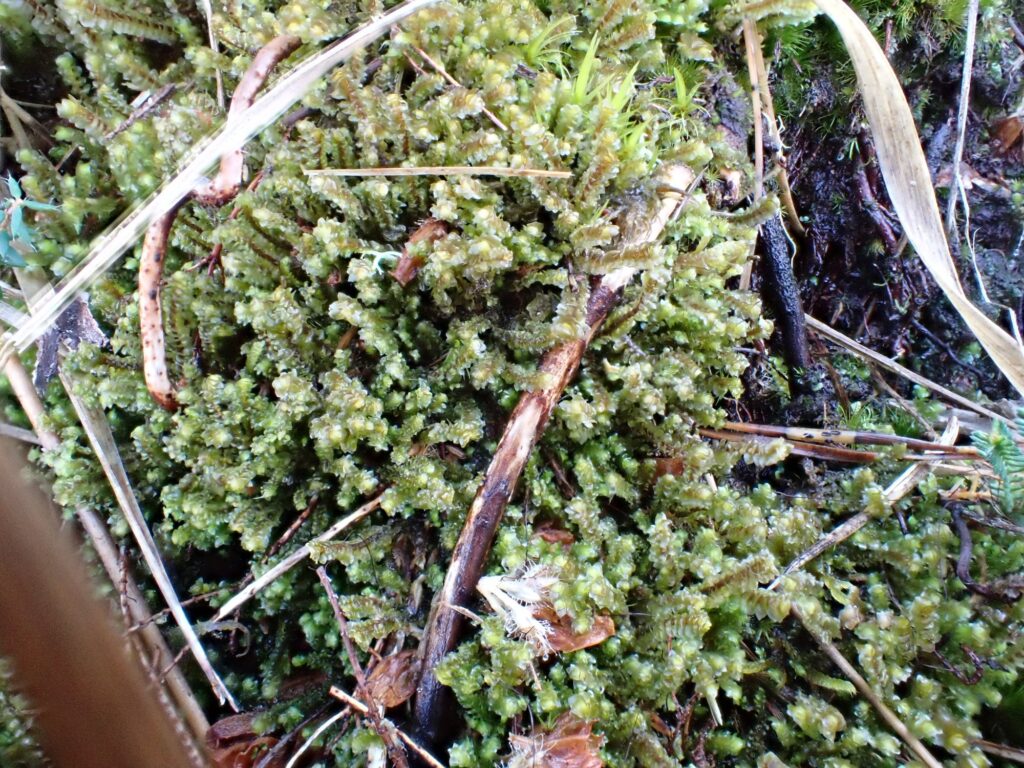
A fairly limited list then, but all from terrestrial habitat with no epiphytic element, and including several notable finds as well as a good representative assemblage of Dorset heathland species.
This work is licensed under a Creative Commons Attribution-NonCommercial 4.0 International Licence. You are free to share and adapt this material for non-commercial purposes, provided you give appropriate credit, provide a link to the license, and indicate if changes were made.