[ccfic]
The Bryology Group visited King’s Wood on the 30th January 2025 and below is the report for the visit. A total of 58 species were identified, several of which were new to the location.
A steep deciduous woodland on chalk could hardly present a more different contrast from the mires of our past couple of sorties. The six moss hunters searching this week however could look down from the frosty North-facing wooded slopes at King’s Wood to a magnificent sweep of the Purbeck heaths, in unbroken sunshine, with the distant mires appearing much less daunting.
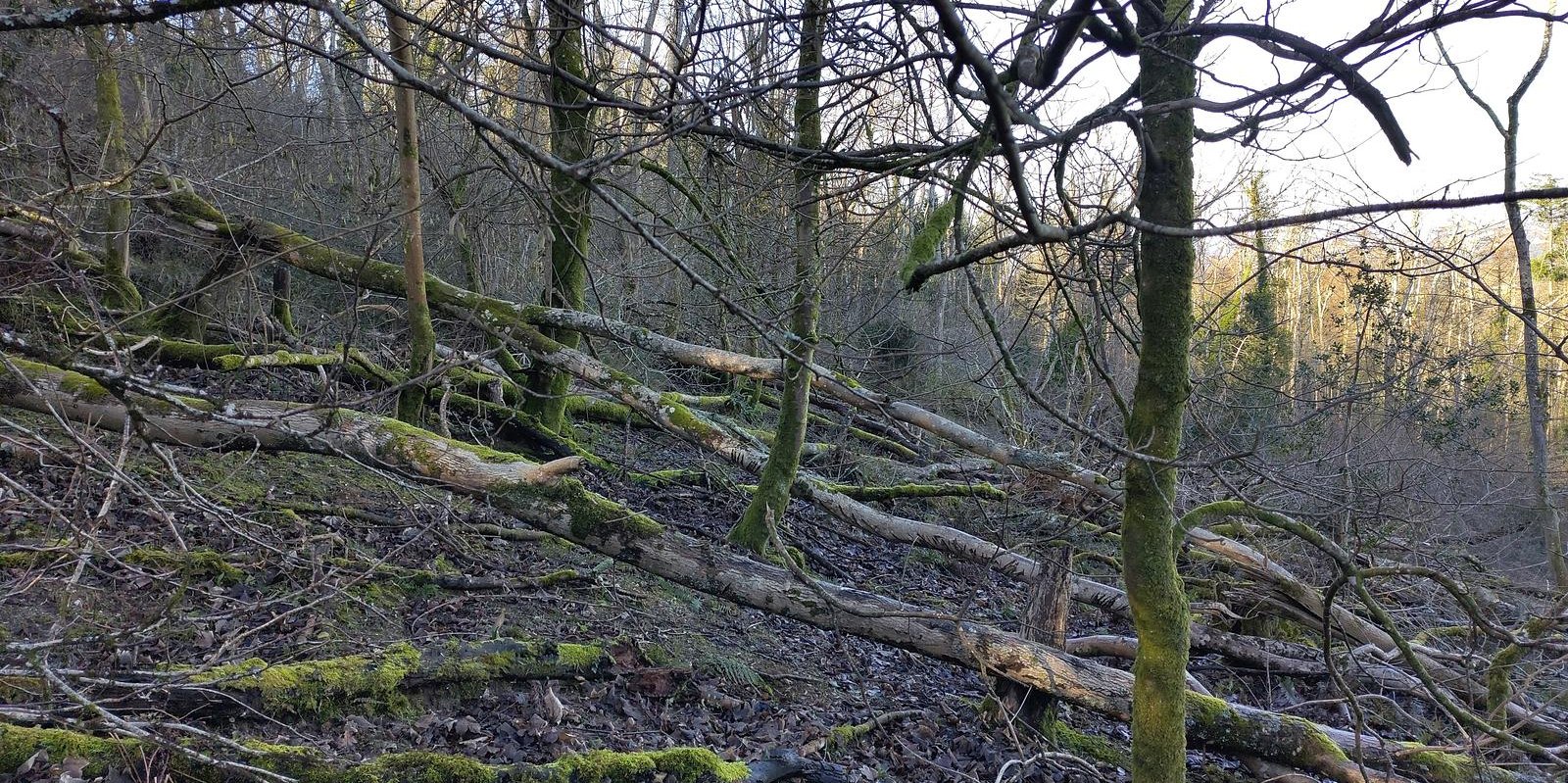
We had sampled bryophytes in King’s Wood before, back in 2015, but very few of the present Bryology Group were recording then, so this was for almost all a new site. The wood is suffering greatly from ash dieback now, and there is very much fallen and felled dead wood, as well as moribund standing timber. The ground is more open locally, especially along the diagonal path that climbs up through the wood, and it was in these open spots that frost lingered. It is too early to tell the effect on bryophytes of the loss of ash, as many of the epiphytes are still present on recently dead trunks, but ash bark is one of the richest for mosses and indeed lichens, so the impact could turn out to be significant.
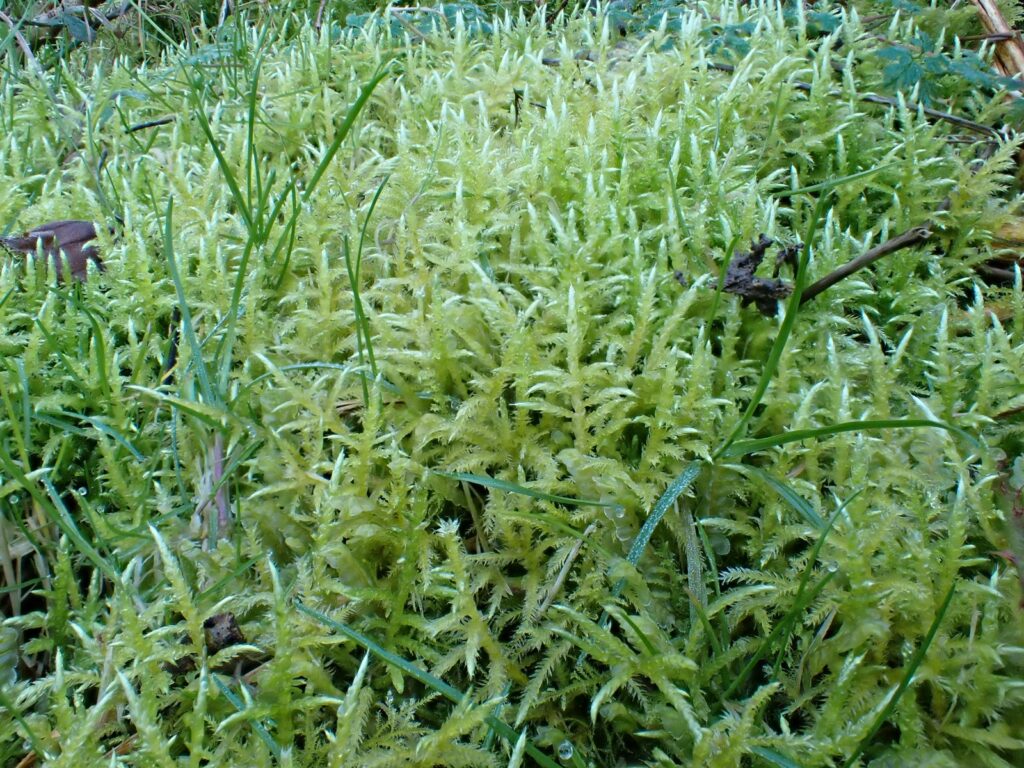
Ash trunks and upper branches now at ground level provided easier searching for some of the epiphytes which, along with the flora of still-standing trees, includes Isothecium myosuroides, Hypnum andoi, H. resupinatum and H. cupressiforme, Homalothecium sericeum, Neckera complanata and N. pumila, Ulota bruchii, Pulvigera lyellii, Cryphaea heteromalla, Orthotrichum pulchellum, Lewinskya affinis, Zygodon viridulus and Dicranum scoparium. The liverworts Myriocoleopsis minutissima, Microlejeunea ulicina, Frullania dilatata, Metzgeria furcata, and much more locally Frullania tamarisci and Metzgeria violacea, are also components of this epiphyte community. Rotting wood supports some of these, notably Hypnum cupressiforme, and also Brachythecium rutabulum, Kindbergia praelonga and Lophocolea heterophylla. Thamnobryum alopecurum, although abundant on the ground, also occurs as a low epiphyte in the humid conditions.
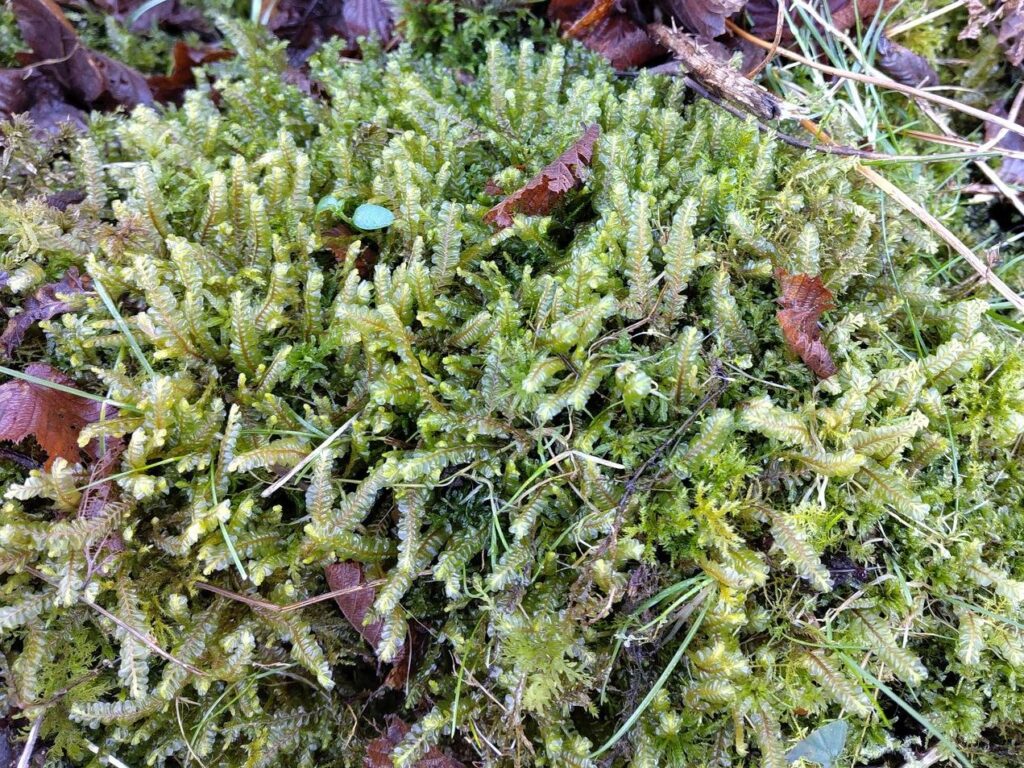
Other woodland floor mosses include Thuidium tamariscinum, Atrichum undulatum, Plagiomnium undulatum and very locally Plagiomnium rostratum, Calliergonella cuspidata, Rhytidiadelphus squarrosus, Hylocomiadelphus triquetrus, Eurynchium striatum, Cirriphyllum piliferum, and the large leafy liverwort Plagiochila asplenoides, these latter two species in unusual abundance. Where competition is low, on exposed soil or rock, species such as Bryum capillare, Amblystegium serpens, Fissidens taxifolius, Plagiothecium memorale, Lophocolea bidentata, Calypogeia fissa, and Pellia endiviifolia occur, while locally directly on chalk stones, the tiny moss Seligeria calycina is occasionally present. Where there is locally more acidic soil, perhaps influenced by downwash from the clay with flints that caps the ridge, a different mix of species occurs, including Dicranella heteromalla, Fissidens bryoides, Rhizomnium punctatum, Bryum rubens, Pleuridium acuminatum and Pseudotaxiphyllum elegans. Other mosses of usually acid conditions, such as Polytrichum formosusm and Mnium hornum also occur locally.
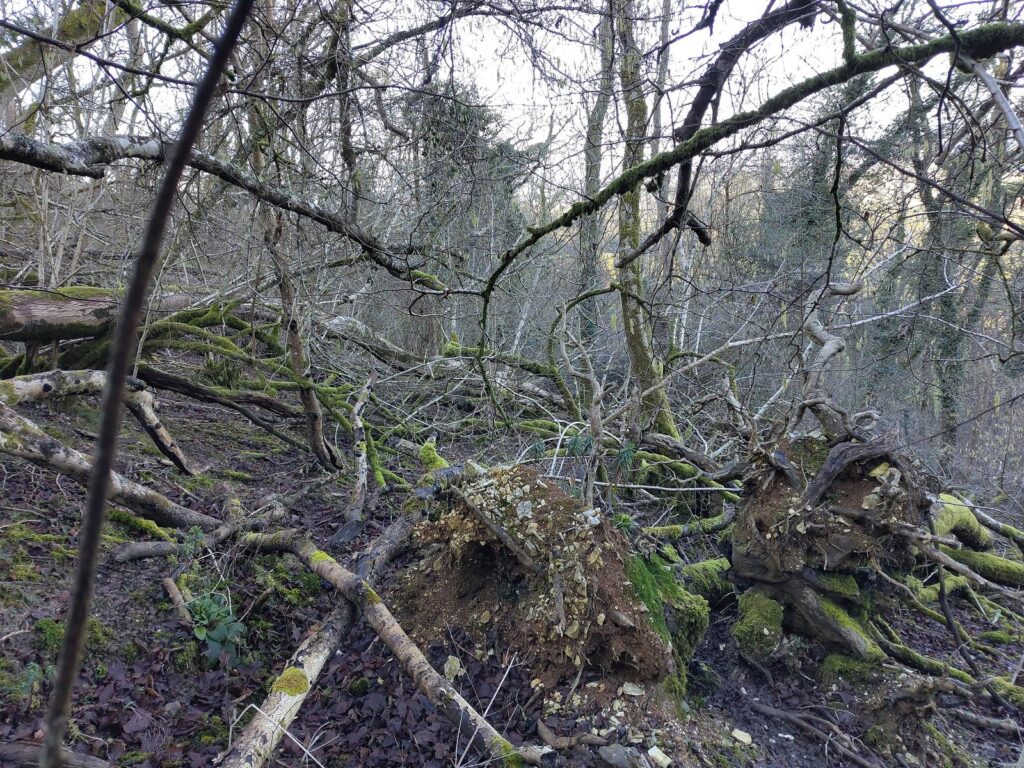
Just to the west, outside King’s Wood proper – where the geology is Tertiary sands and clays rather than chalk – birch, pines, oak and sweet chestnut replace ash as the main canopy. Rotting wood and stumps here support species such as Campylopus introflexus, Orthodontium lineare and Lepidozia reptans.
Rather less than half of the large woodland was sampled in this one visit. The very steep slopes and currently slippery conditions make progress slow, but a reasonable list of species was recorded for this western portion. We enjoyed a very fine day, although it remained decidedly cool in the N facing wood, so our lunch stop was taken above the wood on the sunny grassland of the top of the ridge. We had magnificent views in all directions – including upwards: A pair of white-tailed eagles soared right above us for a few minutes, before floating off west towards Corfe.
This work is licensed under a Creative Commons Attribution-NonCommercial 4.0 International Licence. You are free to share and adapt this material for non-commercial purposes, provided you give appropriate credit, provide a link to the license, and indicate if changes were made.