[ccfic]
Jim White, Thursday 12th February 2026
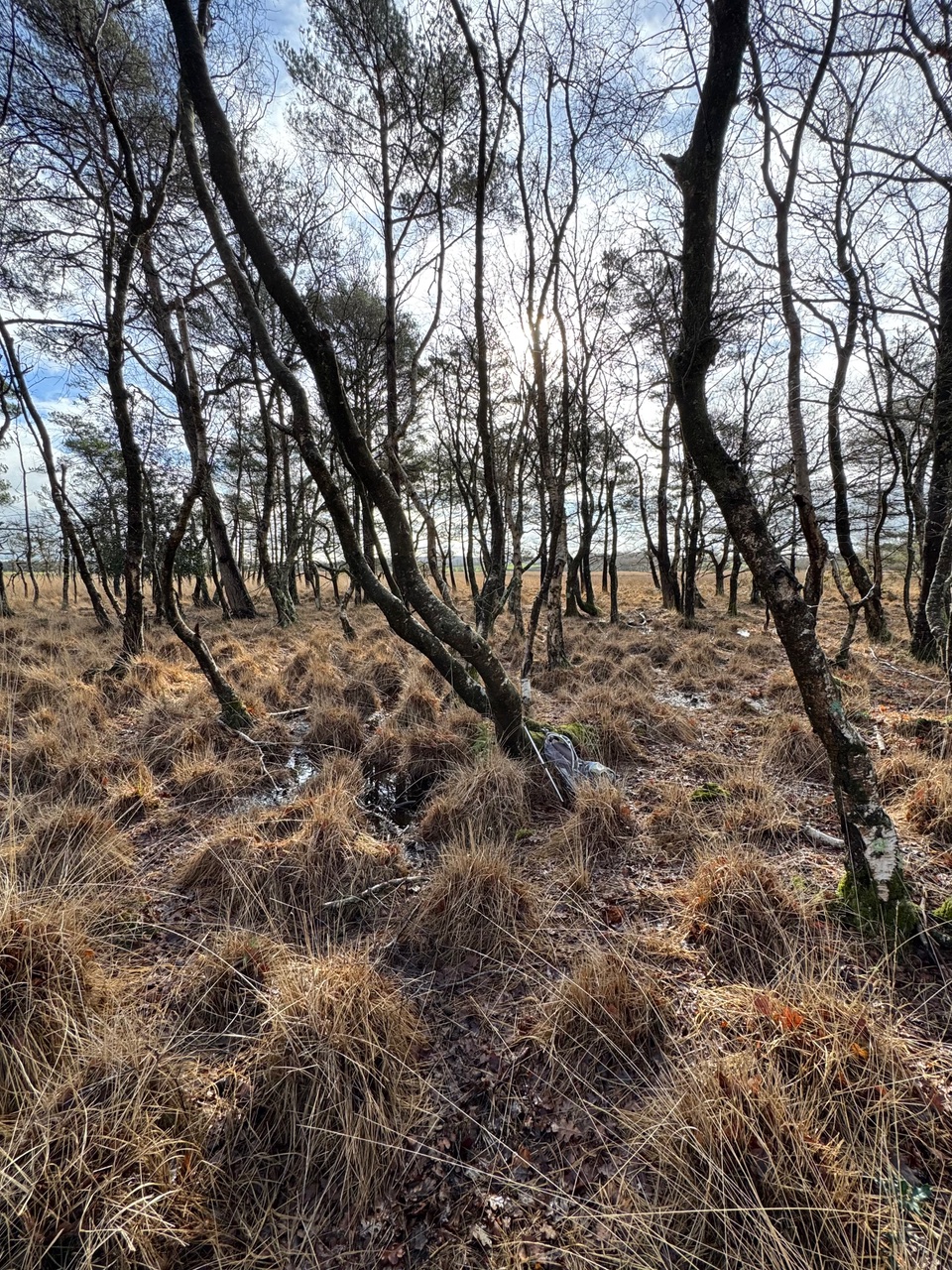
As Thursdays have gone this year, today wasn’t bad; no rain, some sun although a fairly keen breeze. Six bryologists could make it, on a return visit to Arne where we concentrated first on a more thorough search of the Salterns Copse area where the previous week we had found a couple of colonies of Scapania. The search was worthwhile as several more sites for the liverwort occur close by, and all of the populations are on the lower trunks of birch trees rather than on soil. This habitat preference alters the species likelihood, with Scapania gracilis now being the strongest possibility. Confirmation by the national liverwort expert will be required as it is more than 50 years since this species has been recorded in Dorset, and then only once!
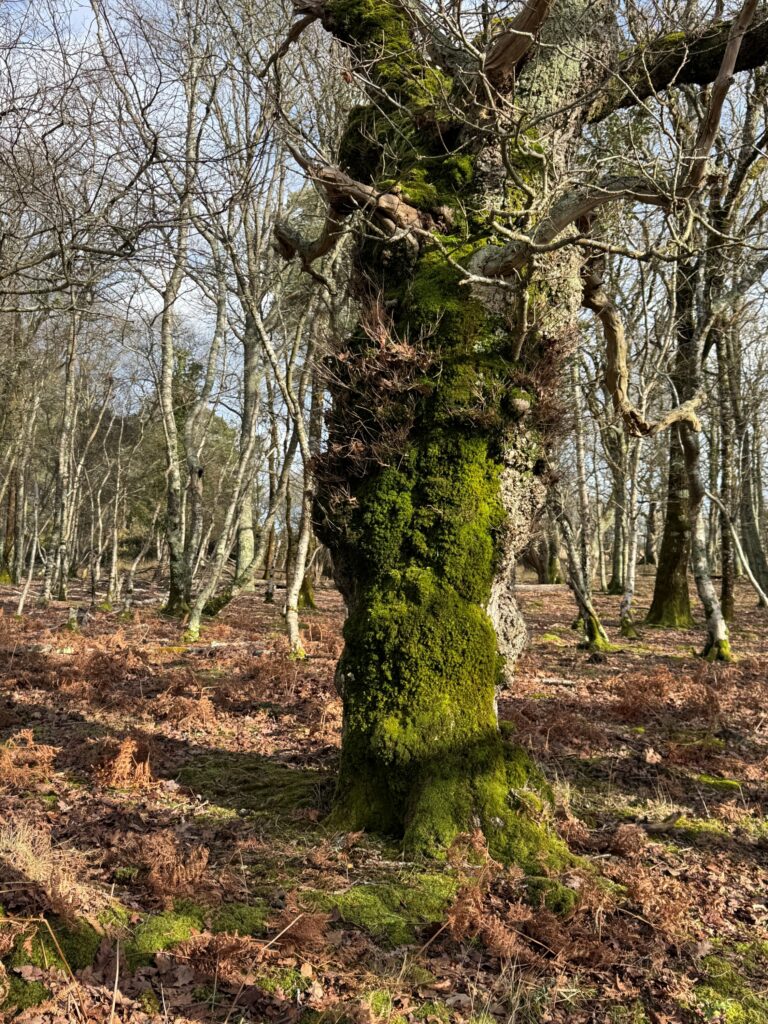
Further bryos occurring in this lightly wooded area, in addition to spp recorded here last week include the epiphytes, Zygodon conoideus, Ulota bruchii, Pulvigera lyellii and very low on the buttress root of a birch, a small amount of Frullania tamarisci, while additional ground species include Kindbergia praelonga and Lophocolea bidentata. Former enclosure banks are a feature of the site, supporting many old oaks some with obvious evidence of their hedgerow history. One such tree, on a west-facing bank, with presumably just the right aspect and inclination has a strikingly large amount of the ‘Dorset special’ moss Neckera smithii, forming a continuous cover from at least 5m down to the ground. The bank nearby also holds a population of Plagiothecium undulatum. Beyond the bank the habitat is wet heath with Molinia tussocks, but water levels are too high at present for meaningful exploration, however Aulocomnium palustre is noted in this zone. Another bank, with a shaded north aspect and bordered by a water-filled ditch, holds an extensive cover of Diplophyllum albicans, while another much less frequent liverwort, Tritomaria exsectiformis occurs in small quantity on another bank.
Within the area enclosed by banks, now carrying a stand of younger oaks than the boundary trees, and in a patch where the canopy is sparse, there is a cluster of hummocks that appear to be old anthills. Each carries a different moss dominant, including spp such as Pseudoscleropdium purum, Thuidium tamariscinum and Pleurozium schreberi, while a few have been disturbed recently, perhaps by the rooting of pigs. The bare clay exposed supports other mosses including Pleuridium acuminatum.
Another fruitful day then, reinforcing the bryological importance of this part of Arne – and with more exploration to come.