[ccfic]
Jim White, Thursday 5th March 2026
A rare event this season; a reliably dry Thursday, and not only dry but with day-long, soft, spring sunlight too! Sadly only four could make it for a further visit to Arne, and this time to the area of Big Wood. Again the area is recorded as ‘ancient woodland’ and the impressive array of veteran oaks would support this, but there is a network of boundary banks (where quite a few of the largest oaks occur) that suggests some of the area may have been small enclosures/fields.
The drier oak woodland has a limited ground flora of mosses including Kindbergia praelonga, Pseudoscleropodium purum, Mnium hornum, Brachythecium rutabulum, Polytrichumm formosusm, Thuidium tamariscinum, and Rhytidiadelphus squarrosus, and on the lower trunks, Hypnum cupressiforme, H resupinatum and Isothecium myosuroides. Most of the trees are well covered with lichens.
The lower wetter ground has sallows, some of which have collapsed, providing ideal humid habitat for epiphytes such as Cryphaea heteromalla, Lewinskya affinis, Ulota crispa agg, Zygodon conoideus, Frullania dilatata, Metzgeria furcata, Myriocoleopsis minutissima and Pulvigera lyellii. Upturned root plates support spp such as Dicranella heteromalla, Dicranoweissia cirrata, Orthodontium lineare and Campylopus introflexus, while the many fallen damp trunks carry a luxuriant epiphyte cover, with additional spp including Dicranum scoparium, Leucobryum glaucum agg, Lophocolea bidentata, L heterophylla, and Tetraphis pellucida.
The oak woodland, with many birch and occasional rowan and holly, grades out into increasingly wet conditions; indeed many mature trees are standing dead or moribund as a result of the permanently high water table. Polytrichum commune, and Aulocomnium palustre are present, along with Sphagnum fimbriatum, S palustre, and S subnitens, and especially on moist banks and hummocks the liverworts Cephalozia bicuspidata, C connivens, and Calypogeia fissa. One such patch of low hummocks, with low competition from higher plants or robust mosses has, among the commoner bryos, a good colony of the rare (RDB, Critically Endangered) liverwort Pallavicinia lyellii. The plants found here are female, and this becomes only the third location for this species known in Dorset; one other elsewhere at Arne and, the first found, at Studland. A further exploration of this area, and perhaps similar habitat elsewhere at Arne, is desirable to determine whether there are further localised colonies.
Yet another good bryophyte find at Arne, albeit for the lucky few! To slightly misquote what the Bard gave Henry V to say, ‘ Bryologists in England now a-bed will think themselves accurs’d they were not here….’ That said, our little ‘band of brothers’, down to three at this stage in the afternoon, happily included Lynne whose eagle eye spotted the liverwort and realised its significance; and Jerry whose photography skills and equipment secured the splendid image below!
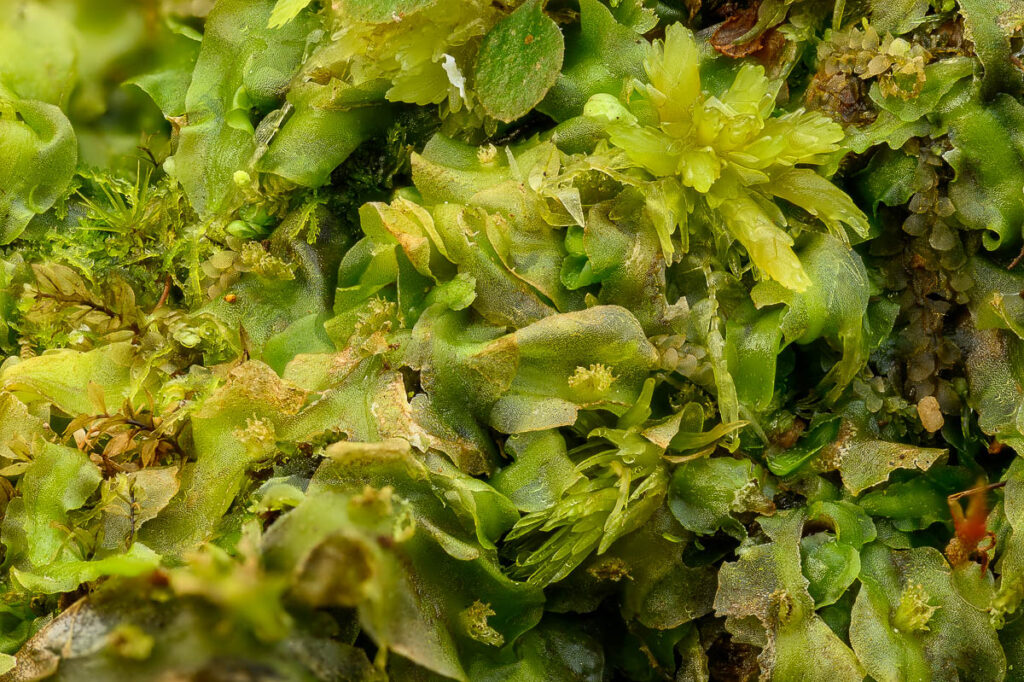
Female plants of Pallavicinia lyellii growing on a small hummock at Arne – jerryfennerphotography.co.uk
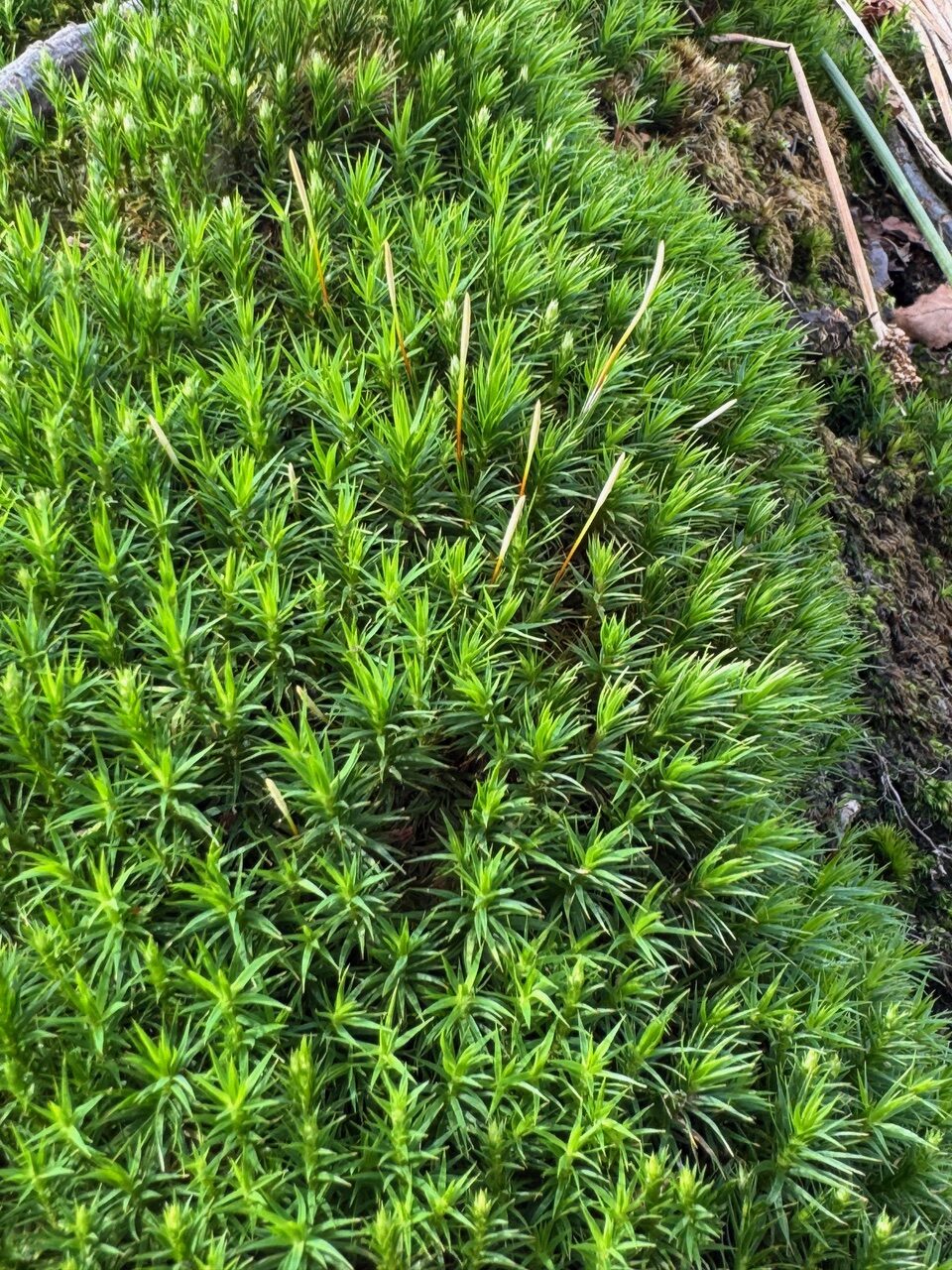
Picture top: Polytrichum formosum in Big Wood, Lynne Goble