[ccfic]
Article by Richard Caldow
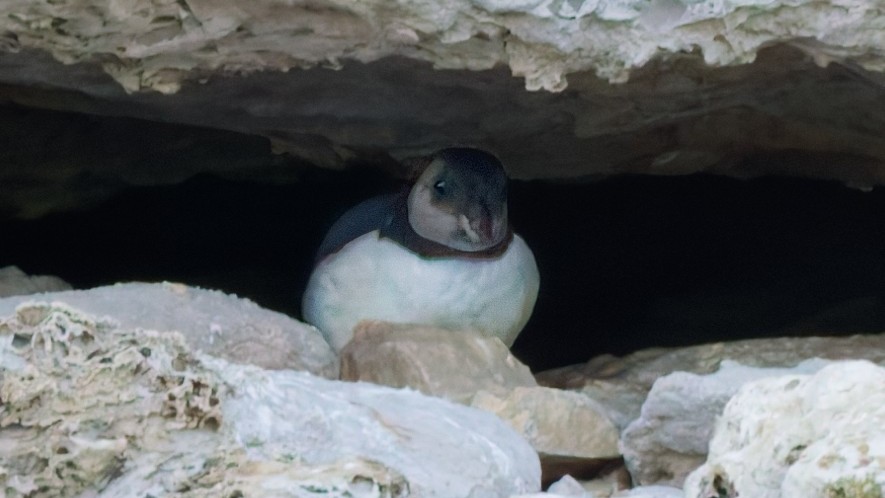
Did you know that puffins breed in Purbeck? If not, you might have been surprised by the media frenzy in July over the sighting of a baby puffin (puffling) in Purbeck. Why was this such big news? Because no one has seen a puffling in Purbeck for 30 years and “our” colony is on the brink of extinction.
Back in the early 1960s there were 30 to 40 pairs of puffins in Purbeck spread between Durlston and St Aldhelm’s Head and there were colonies on Isle of Portland and the Isle of Wight. Since then, those other colonies have been lost and the Purbeck colony has shrunk to about 3 pairs all nesting at one location. Puffins are now one of the rarest breeding birds in Dorset. They may soon be rarer (in Dorset) than breeding ospreys! We need to find out what their problem is and, if we can, do something to help before it’s too late.
No one knows what caused the collapse in numbers. Poor breeding success due to predation has been suggested but this is very hard to prove because puffins nest hidden in an inaccessible crevice on the cliffs and pufflings fledge at night. The only “easy” way to establish if puffins are breeding successfully is to watch for them bringing fish for their chicks and determine if: i) they bring in fish at the required rate (about 5 meals/chick/day) and ii) they bring in fish at that rate for at least 38 days. Not so “easy” after all.
In 2023 I began watching the puffins to find out what was going on. I established that we had three pairs, all of which laid an egg and hatched their chick (puffins only lay one egg each year). They fed the chicks at a good rate but for no more than for 25 days. Then they abruptly stopped bringing in fish. Something went wrong. I guessed that their chicks had been eaten.
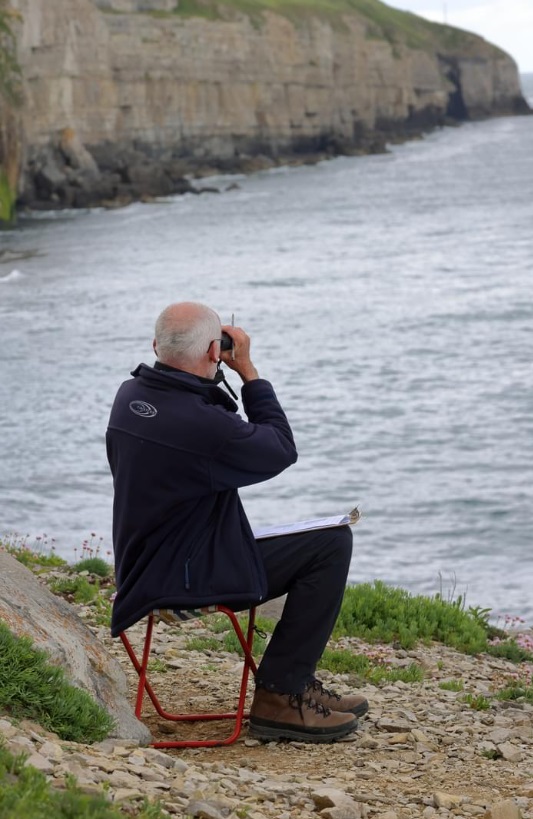
March 2024 and it was time to go down to the sea once more. But it was also time to get help. Who was I gonna call? PNHF of course! This is not just casual bird-watching. It requires total concentration because puffins carrying fish arrive very infrequently and very fast. You have to scan the sea and air continuously by eye to spot incoming puffins and then get your bins on them ASAP as they fly in to check whether or not they have fish. One lapse in concentration and you might just miss the only delivery in a chilly 4 hour watch. Knowing you might just have missed the only fish delivery because you were gazing momentarily at a passing peregrine and so only just caught a glimpse of a pair of orange feet disappearing into the cliff around the corner is VERY annoying. But it’s so hard to stay focussed when: i) its cold, ii) you haven’t seen a puffin for two hours and iii) there is always something else of interest to attract your attention – e.g. a flock of migrating whimbrel , a screaming swift party, or even a sunfish waving at you as it drifts past.
All the breeding puffins are most likely to be seen together early in the season. So, we began watching on March 15th. It’s cold sitting on the clifftop for hours at a time in March (and April, and May and even June!). By mid-April we had counted 6 puffins on several days, had seen birds mating and carrying nesting material and knew we had 3 breeding pairs again. By the end of May (when the eggs should have hatched) we were desperately hoping to see the first fish being brought in. It’s important to record the day on which this first happens because that allows you to work out the earliest date on which chicks might fledge (38 days later). Then, simply by watching whether or not fish keep being delivered until then, you can establish success or failure.
A box of Chococo chocolate fish was on offer for the first volunteer to record puffins carrying fish. In spite of the ensuing surge in volunteer effort, the prize was not claimed. The puffins did not bring in any fish! We kept watching and hoping until mid July when the last puffins were seen and hope evaporated. 128 hours of patient cliff-top watching and no reward!
In 2025 we had the Chococo chocolate fish prize roll over from 2024 , so TWO boxes on offer. We started on 13th March but a 3 hour shift passed without a puffin being seen (somehow that makes things even colder – brrrrrr!!!!!). Puffin watching is not for the faint hearted! But on the 20th March all six of them were back. Between then and mid-April (egg laying time) we had amassed an impressive tally of lonely cliff-top vigils – sometimes seeing puffins but often not. Those watches are particularly hard – especially anticipating the long uphill slog back to the car. On the 1st of June there was great excitement following a report on social media that someone had seen a puffin with fish that morning. Annoyingly, this person was not a PNHF volunteer puffin watcher! But that meant I could hotfoot it down to the cliffs in the afternoon and claim the chocolate fish prize for myself! Imagine my disappointment when four hours of watching yielded NO FISH! In fact, no one saw puffins with fish thereafter. A puffin was seen carrying long strands of seaweed on 9th June and I suspect that is what was seen on 1st June too! No fish = complete failure. So, like 2024, a sterling 127 hours of surveying and no reward. Puffin watching is not for those who seek instant gratification.
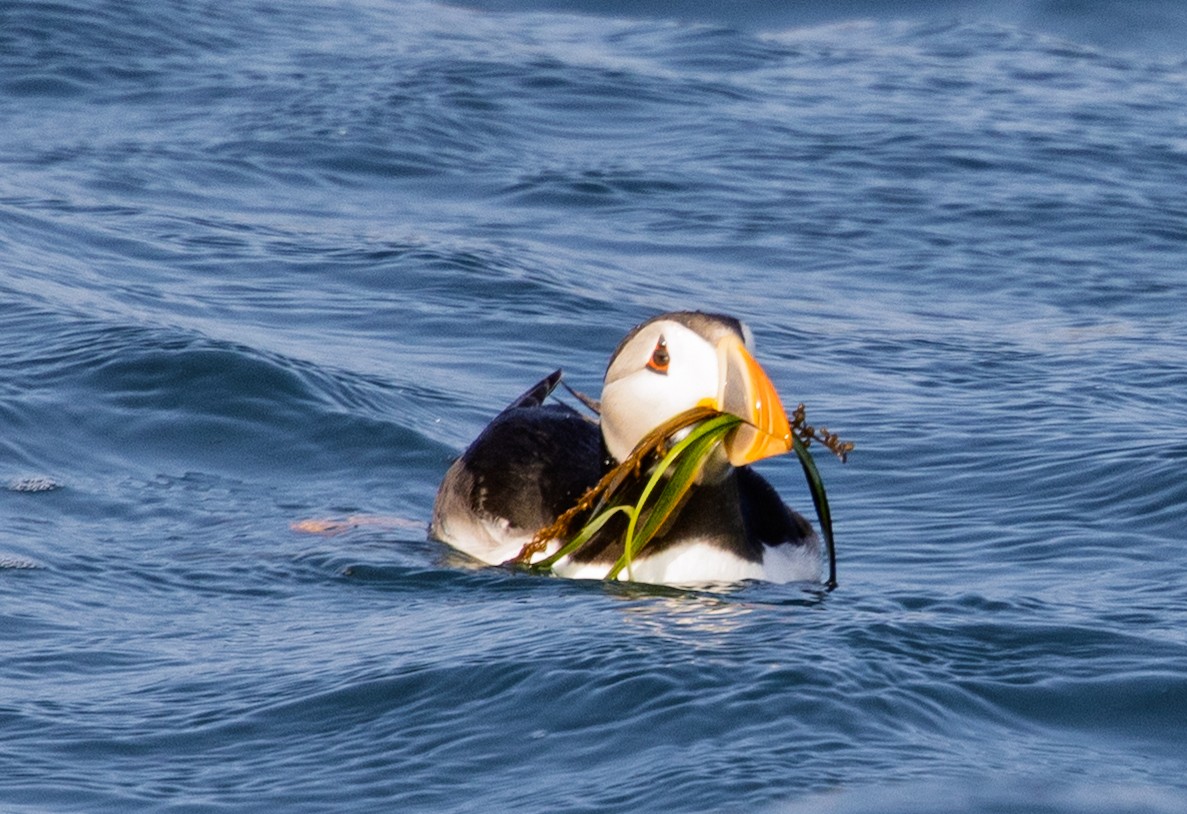
2026 began with much media coverage about dead puffins washing up on the coasts of Europe after winter storms. Watches on the 10th, 14th and 16th March yielded no puffins. We feared the worst! Thankfully on the 18th four were seen and much to our relief on the 9th April all six reappeared. On the 16th April one bird was collecting seaweed, so was just about to lay its egg. Puffin eggs take 40 days to hatch, so we predicted first fish carrying around 26th May. As we approached the big day the volunteers put in extra effort. Finally on 31st May it was chocolate FISH day!!!!!.
By 5th July we were tantalisingly close to the magic 38 days of deliveries. On 7th July the National Trust chartered a boat and, I along with two hardened puffin watchers and some other folks went on a puffling hunt. Four hours after setting off not a puffin had been seen and the crew was growing restless. But then a cry went up PUFFLING!!!! Someone spotted the baby puffin tucked inside the nesting crevice. Tentatively it came out. This was a magic moment, the first puffling seen in Purbeck for thirty years! A great reward for another sterling effort by the volunteers who racked up an impressive150 hours of cliff-top watches.
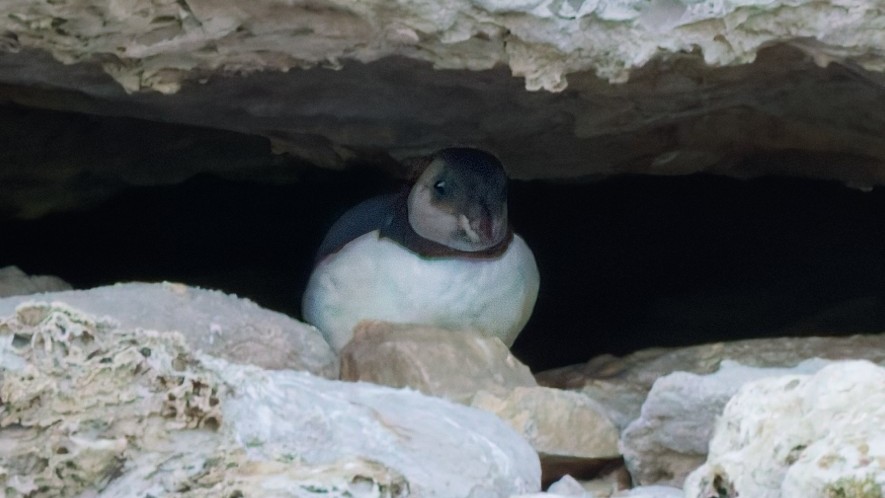
This puffling won’t save the Purbeck colony but, thanks to three seasons of persistence, patience and resilience shown by the volunteers we now know that Purbeck puffins can lay fertile eggs, hatch them out, and in some years find enough food to rear a chick and avoid predators. Although 11 out of 12 breeding attempts in the last 4 years have failed, that one puffling gives everyone hope that our efforts to understand why they usually fail are not a futile endeavour.
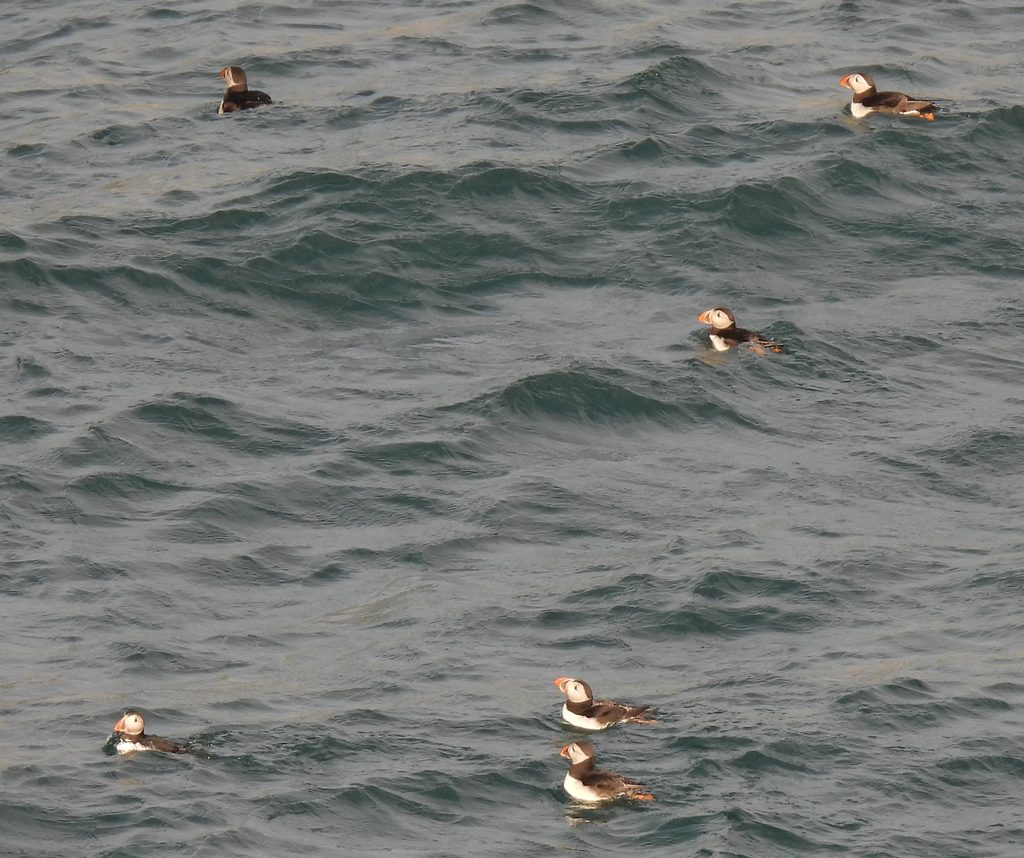
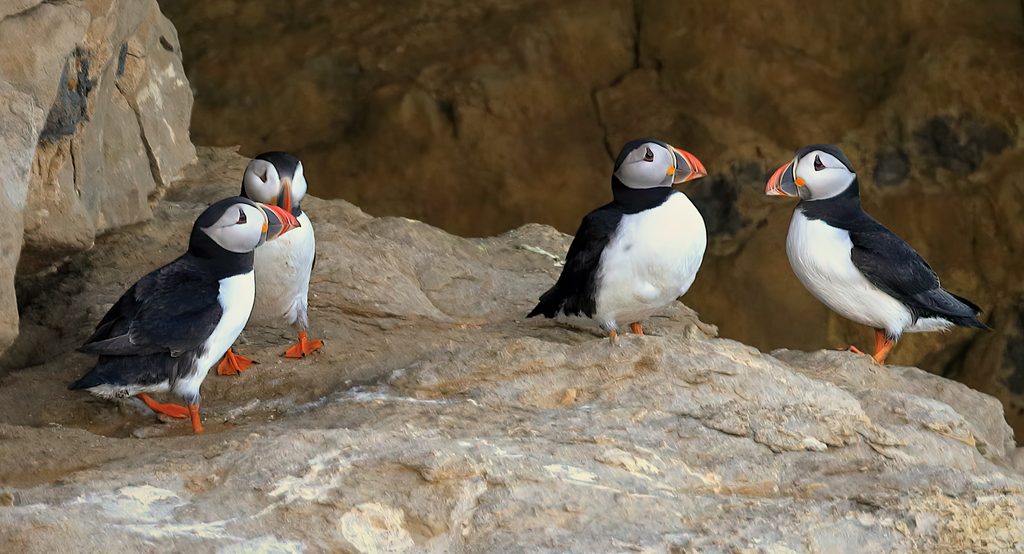
As part of that endeavour, the National Trust installed trial cameras on the nesting ledge in 2024 and in 2026. In 2024 the volunteers trawled through 75,000 images looking for predators like rats or mice. We didn’t see any but that doesn’t mean they were not there. Now we have another 53,000 images to examine. One of the cameras was located where the successful pair of puffins nested. A sneak preview shows adults bringing in fish AND the baby puffling. So, if you sign up for image processing this autumn, you will help us to get even more insights into the secret life of our puffins when the planets align and they rear a puffling. They CAN succeed and maybe they will succeed more often if we can solve the mystery and implement measures to fix whatever the problem might be.