[ccfic]
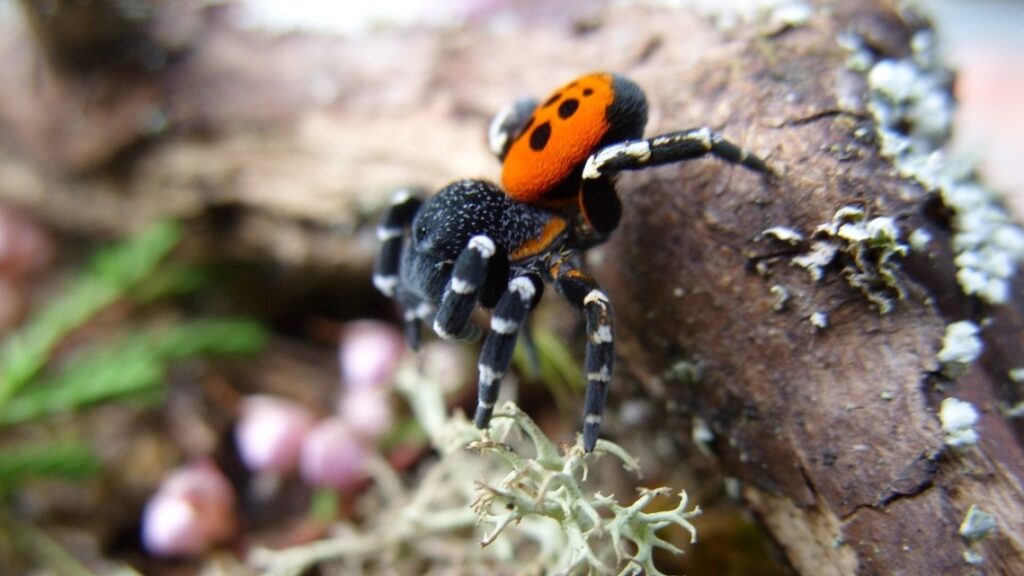
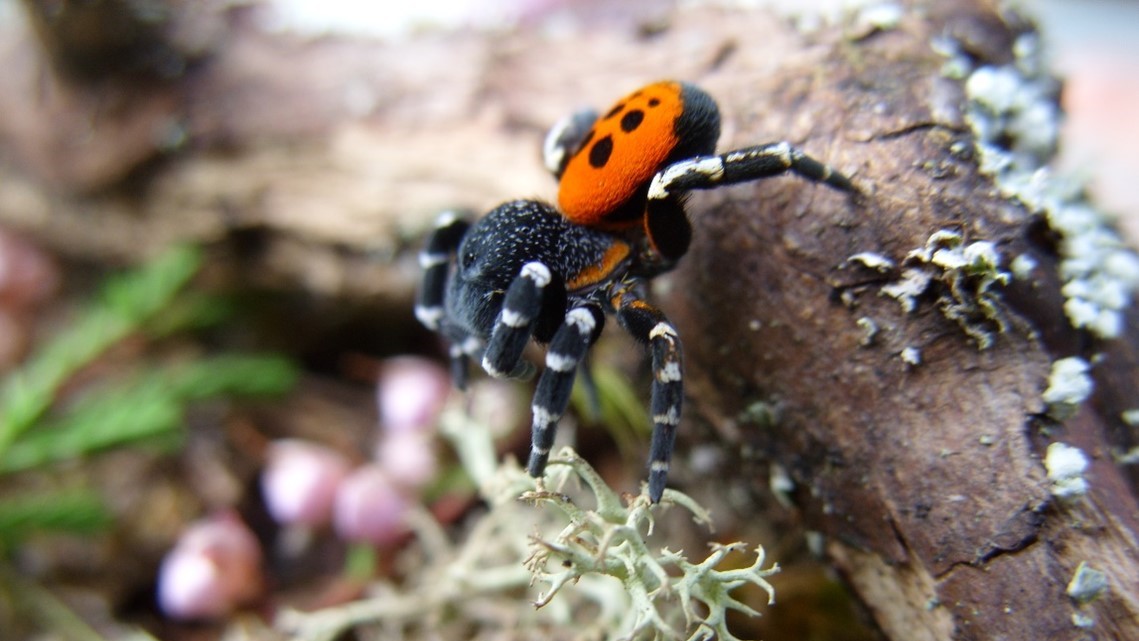
The Ladybird Spider (Eresus sandaliatus) is one of the UK’s rarest and most striking spiders, instantly recognisable by the male’s bright red colouring that resembles a ladybird. Once thought extinct, it was rediscovered in Dorset in 1980. Today, it is found only in Dorset, making it a truly special part of the UK’s natural heritage. The species relies on lowland heathland, a habitat that is itself increasingly under pressure, and its survival is closely tied to the conservation of these unique landscapes.
The Purbeck Heaths National Nature Reserve is one of the few places where the Ladybird Spider still occurs. Unsurprisingly, significant effort has gone into protecting and expanding its populations.
Below, Stewart Milburn, RSPB Dorset Estates Operation Manager, shares his insights:
”The story of the Ladybird Spider (LBS) is a special one, going from a single remaining site in the UK to more than ten today. The fragility of having the entire population in one place, within a dry, high fire-risk heathland, needs little explanation. Over time, and with a huge amount of effort, a small team has successfully translocated individuals to new, carefully selected sites”.
”We are now very fortunate to have a trained and licensed team of volunteers supporting this work (a licence from Natural England is required to disturb or handle LBS). Their efforts include translocations, site condition surveys, and site maintenance”.
”We would like to extend our sincere thanks to all the volunteers and staff who give their time and effort to support this species”.
To learn more about its ecology and biology, follow the link to the species information guide: Ladybird Spider Factsheet
Note: The image below and above this article shows a male Ladybird Spider and is taken by Ian Hughes