[ccfic]
Article by Jacob Aimable-Lina
Images by Mike Wenham
Glow-worms or ‘Glowbeetles’?
As darkness falls over the heathland and grasslands of Purbeck, tiny green lights can sometimes be seen glowing amongst the vegetation. These remarkable displays belong to glow-worms, one of Britain’s most fascinating and magical insects.
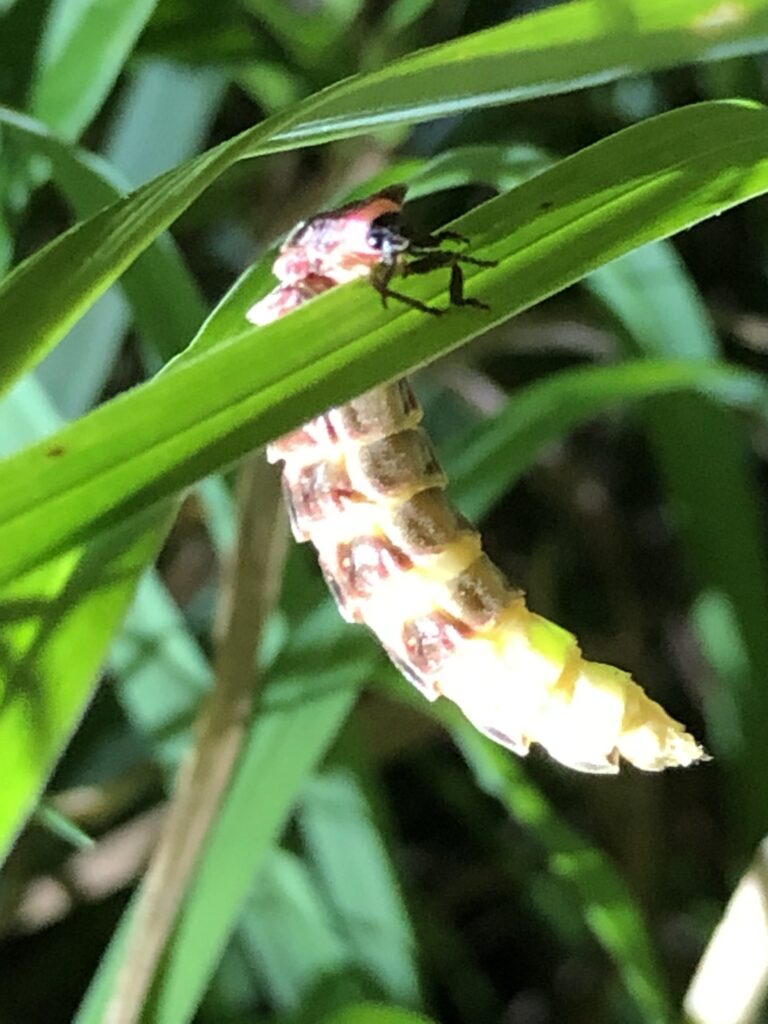
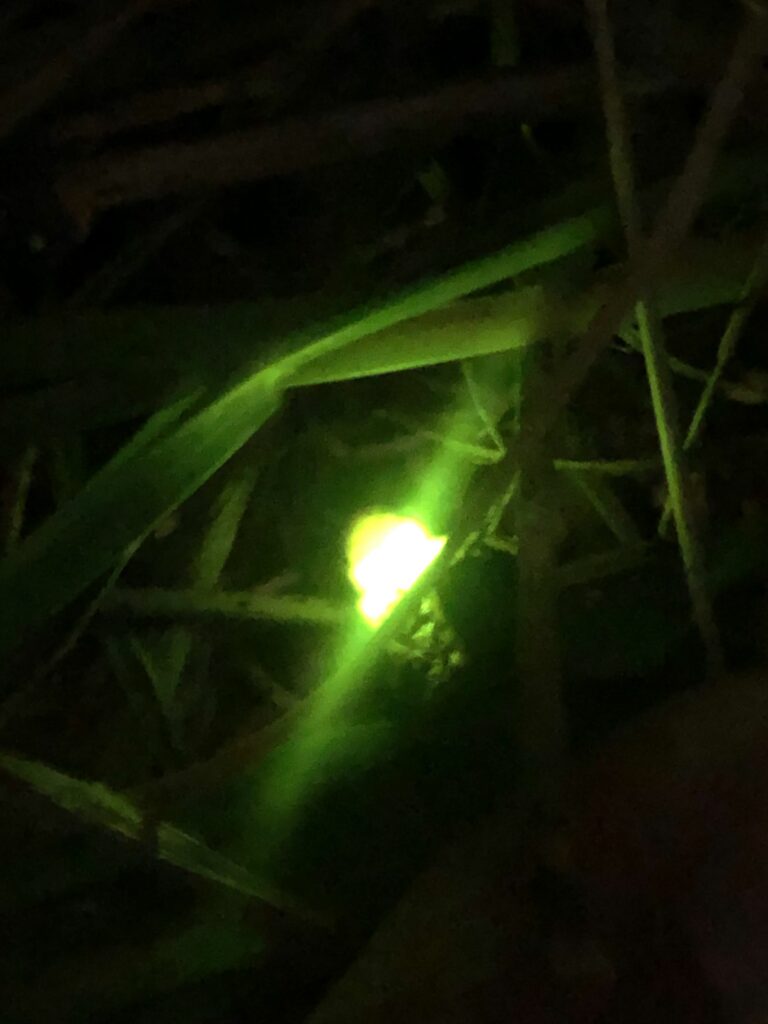
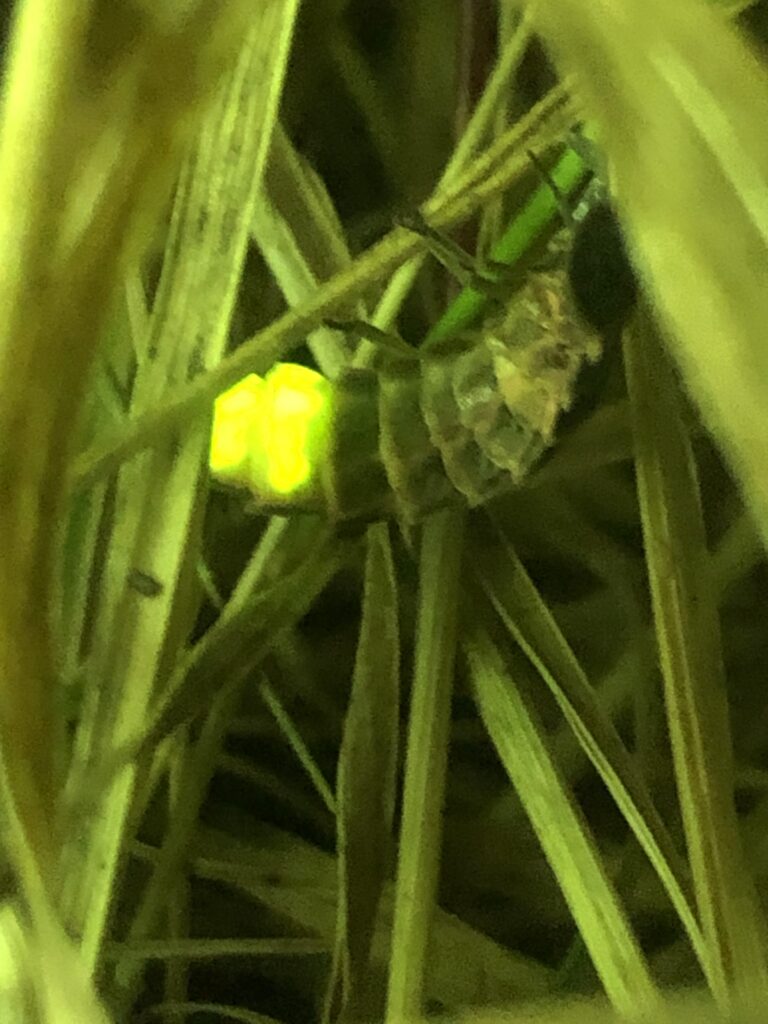
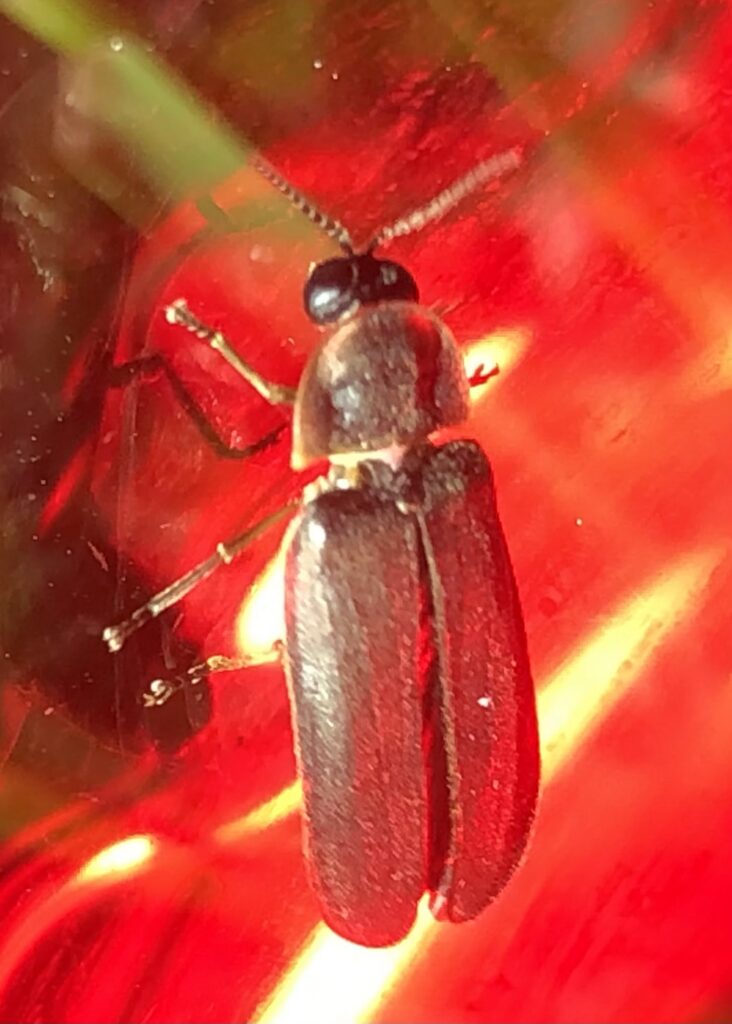
Glow-worms (Lampyris noctiluca) are in fact beetles, belonging to the family Lampyridae. Whilst wingless females and larvae glow brighter than airborne males, all do produce the signature glow that’s makes these beetles one of the most recognisable invertebrates in the UK (see image). Most of the glow-worm’s lifespan is spent in a larval phase, and like other beetles, hibernates over winter under logs and rocks, emerging in the spring to feed or metamorphose and mate. Glow-worm habitat can vary depending on their life stage, with larvae preferring damp microclimates in unimproved grassland or woodland verges where they can hunt their primary food source of snails and slugs. After 1-3 years (conditions dependent) they become the more recognisable adult glow-worm. These adults do not process functional mouthparts, and so (in the true essence of spring) are solely focussed on reproduction during this time, meaning that adult glow-worms are only alive for a matter of days/weeks.
Why all the fuss?
It’s important to make clear that we don’t just monitor these special insects because they glow in the dark, although admittedly it may be a contributing factor. Glow-worms are in fact very bright indicators of a healthy ecosystem, and since the types of habitats glow-worms thrive in are some of the most common habitats nationwide, conservationists can use glow-worm monitoring to show what’s working and where it’s working, in some of the areas of the country most exposed to human interference.
Where are we today?
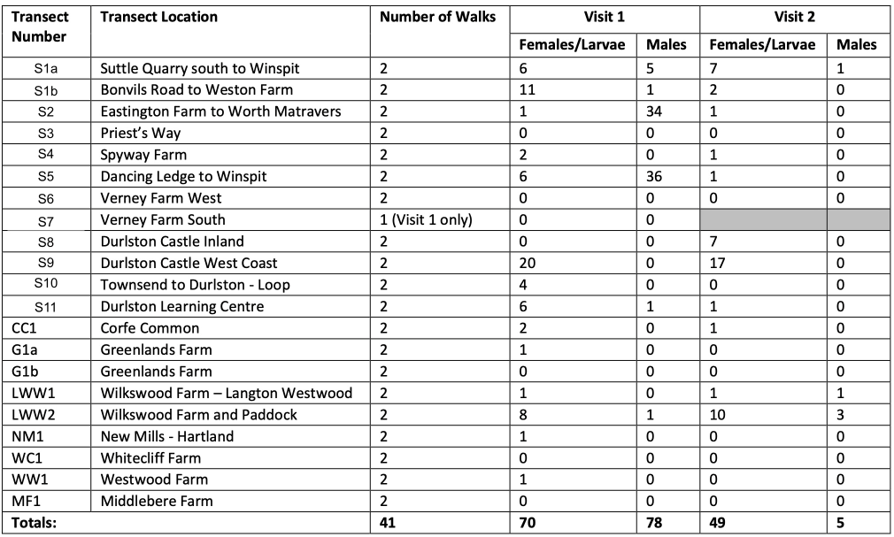
Glow-worms have undergone a sharp and visible decline in the UK due to a variety of factors such as light pollution and the use of pesticides, sadly earning them a place on the UK’s red list as near threatened. However, 2025 was an ambitious year for the monitoring of glow-worms in the Purbecks. For the first time since monitoring began, over 200 glow-worms sightings were recorded by volunteers, with record peaks of 42 males and females observed along the Dancing Ledge to Winspit transect on the 16th of July. However, promising this may be, on average transects revisited in 2025 had lower numbers of glow-worms than in 2024.
What do we do?
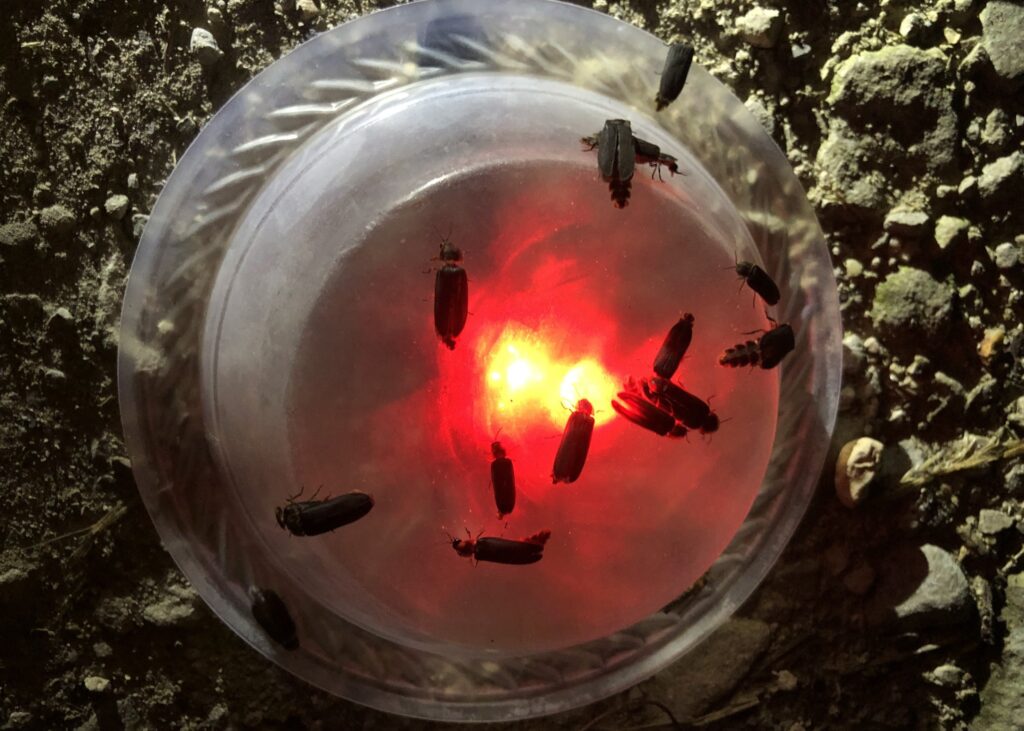
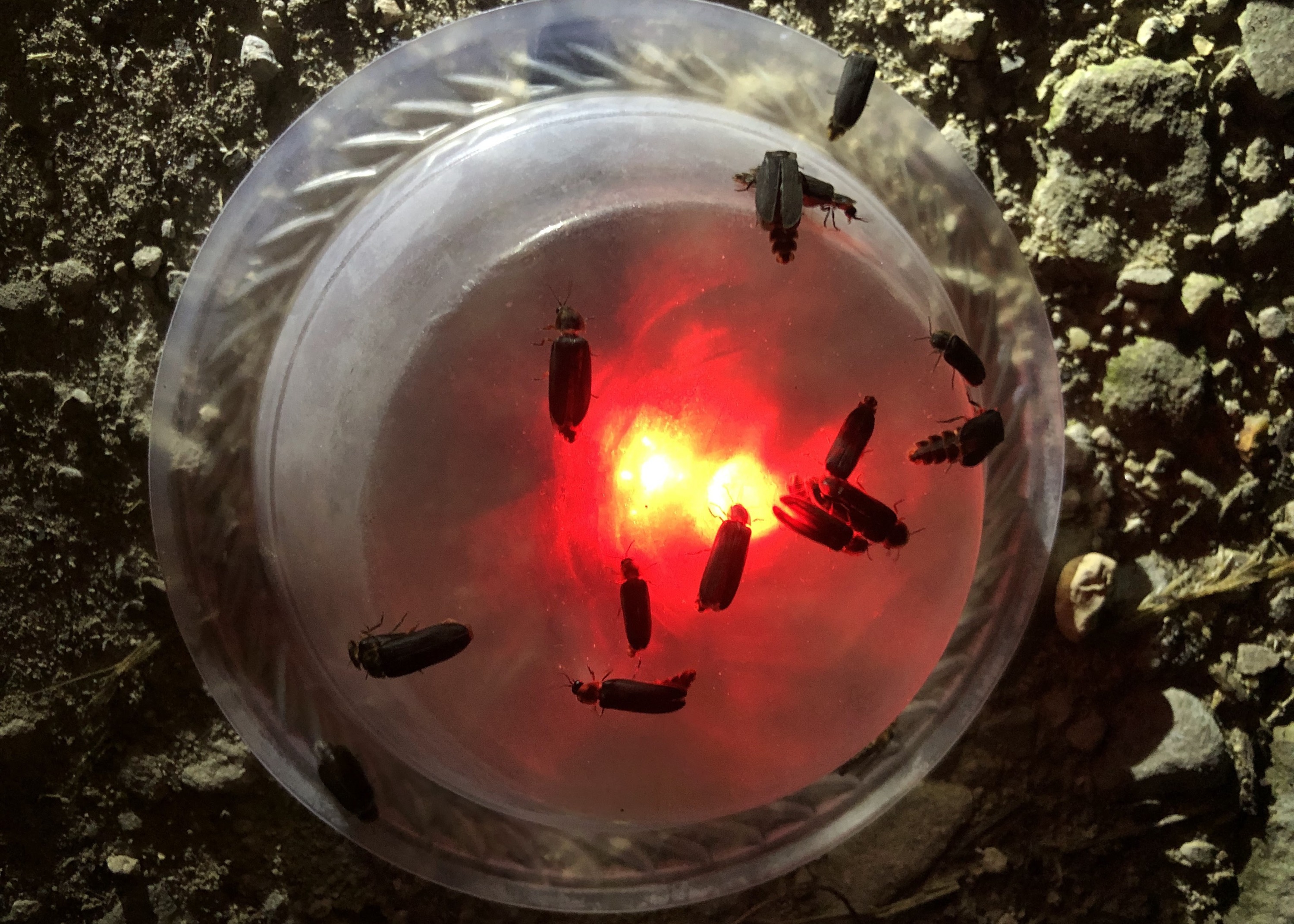
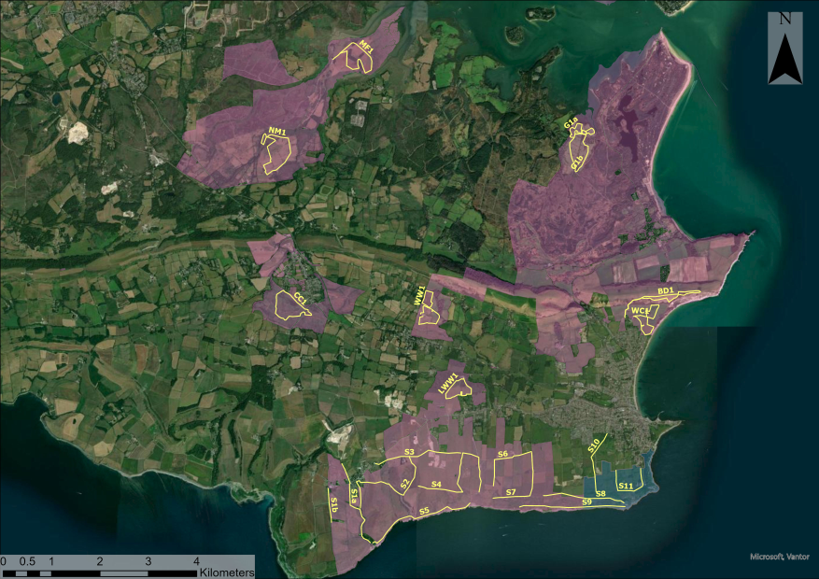
Surveys were carried out by keen eyed volunteers from the Purbeck Natural History Forum. They were allocated set transects which were monitored twice during the peak period of glow-worm activity (July and August). Surveys were undertaken during calm, warm and dry conditions, between 10pm and midnight. Originally 12 transects were set up in 2023, and these have been walked every year since. This year an additional 9 transects were set up and walked for the first time. Surveyors walk these transects and record the number glowing females and larvae. Furthermore, light traps consisting of red bicycle lights placed underneath upturned transparent bowls were set for 15 minutes to attract males, which were then counted.
What we found…
In 2025 A total of 119 female and larvae and 83 male Glow-worms were recorded on all transects and visits combined, a colossal effort from all volunteers involve:
Across the three years for the original 12 transects for which we have the most data, the averages per transect were:
- 5 in 2023
- 15 in 2024
- 14 in 2025
At a glance, these results suggest that Glow-worms are relatively widespread across South Purbeck, and these findings have created a baseline showing where these special creatures can call home in South Purbeck, providing hope for future years.
With these results, future targeted management can be considered and implemented across the region. Perhaps, like we’ve seen locally with Speckled Footman and Lady Bird Spiders, there is even potential for future captive breeding & reintroduction programmes! Exciting times.
If you are interested in joining us for surveys, you can easily request to join the Purbeck Glow Worm Project Group via the PNHF website: Home – Purbeck Glow Worm Project Group – Purbeck Natural History Forum
If you are lucky enough to come across a glow-worm when not doing a survey with us, please report the record via the UK Glow Worm Survey website: UK Glow worm survey home page