[ccfic]
Text and pictures by Sophie Lake
Scrambling around tussocks of Purple Moor-grass that reached well over my knees, I slid into hidden squelchy runnels and floundered out among thick rushes – I was in the Fen Arm on Hartland Moor, searching for some old records of Petty Whin, a species I was hoping to study. This was 1998, and livestock grazing had only relatively recently been reintroduced to the Purbeck Heaths. It seemed improbable that the slender spiny shrub had survived – it certainly wasn’t visible. But over the months and then years, the cattle and ponies gradually reduced the mass of coarse vegetation and, almost miraculously, old bushes began to re-merge, their presence only given away by their bright yellow, pea-like flowers. I wander down to visit them most years, enjoying this small reassurance of nature’s resilience. However, this spring, to my absolute joy, I found that this wasn’t the only secret that the Fen Arm had been harbouring.
In truth, the discovery wasn’t entirely unexpected, but I’d been waiting a while. In 2020, I was working for Plantlife on Back from the Brink (BFTB), a multi-million, cross-taxa partnership project carried out by the various national species conservation groups and local partners under the leadership of Natural England. In Dorset, the project focussed on re-creating the early successional sandy scrapes, shallow pools, and exposed clay that is vital for some of our most intriguing – and rare – invertebrates and plants. This proved gratifyingly effective for several species, including Marsh Clubmoss, Yellow Centaury, Pale Dog-violet, Pennyroyal, Purbeck Mason-wasp, Heath Tiger Beetles and more. However, one species that seemed to have foiled us was Pillwort.
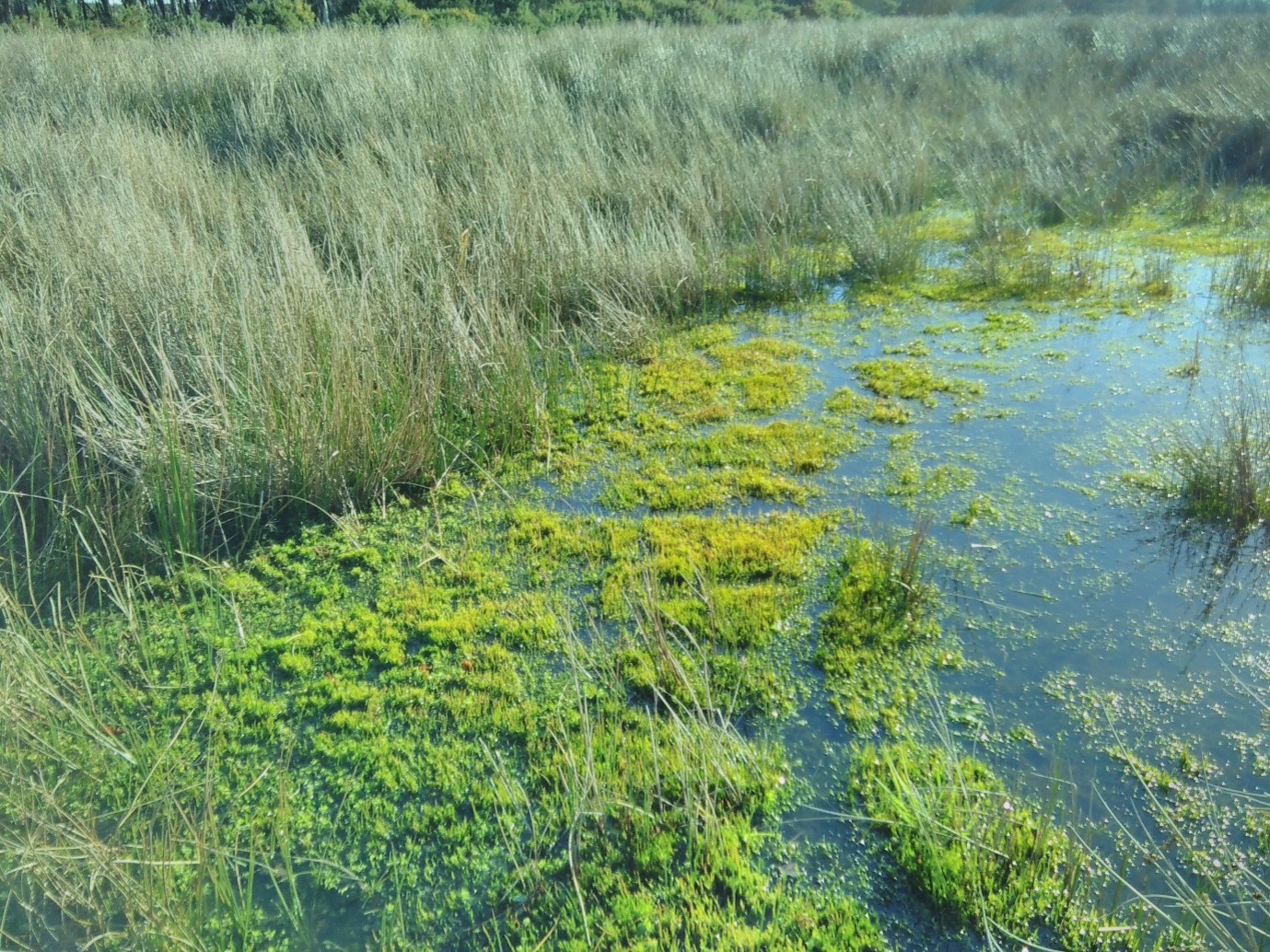
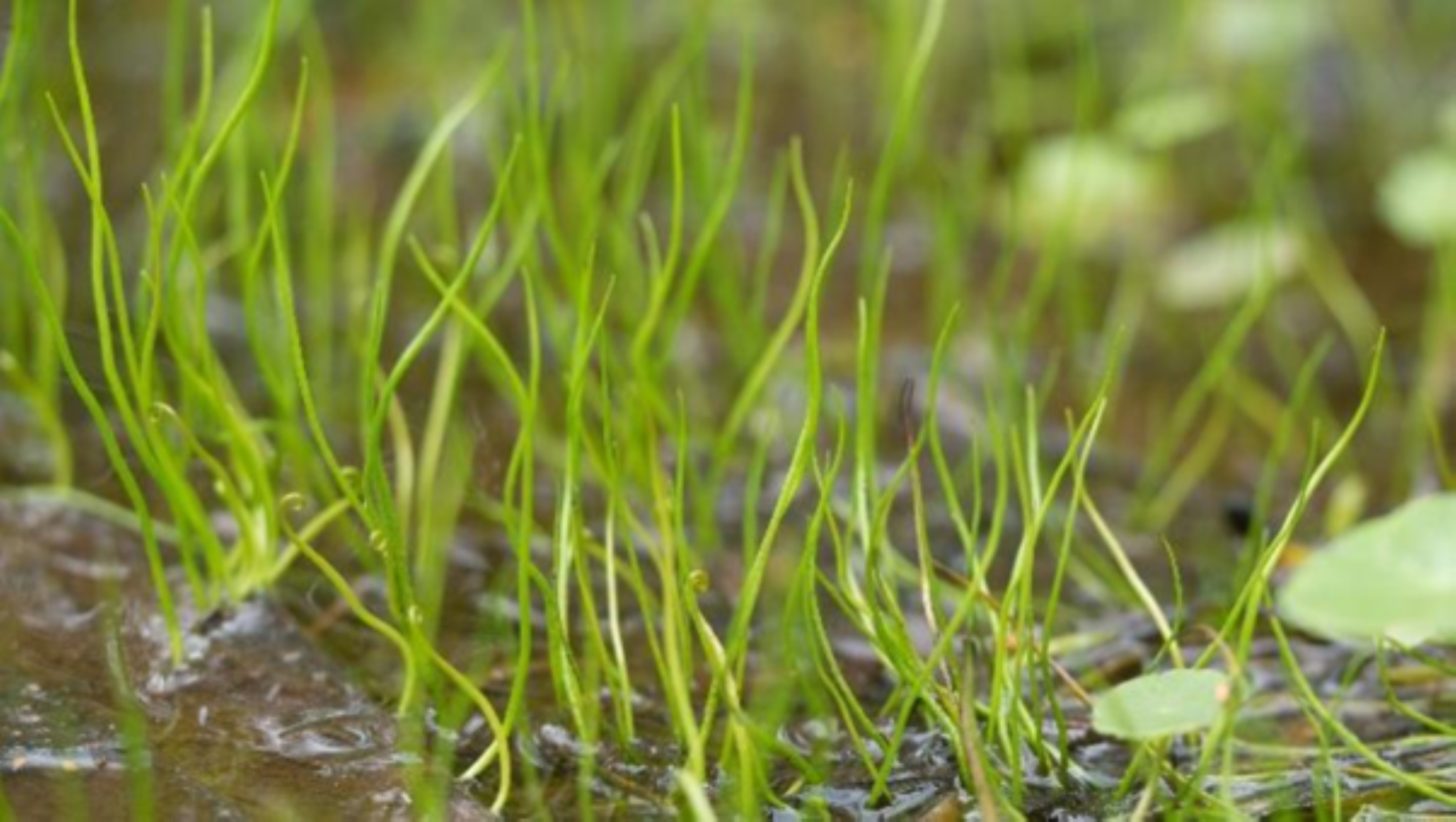
Pillwort is an aquatic fern that at first glance can be mistaken for a small, slender rush. The thread-like fronds arise from horizontal rhizomes and can create characteristic lime-green sward that, with a little practice, can be spotted from a distance despite its small size. It is often found ringing the drawdown zone of seasonal ponds. Close up, the fronds have a distinctive kink and sometimes you can find a hard, spherical spore-case at their base (presumably the “pill”), although as it grows around shallow pools, runnels and loch shores, you’ll generally end up getting wet feet trying to see this.
Pillwort was known from the pond at Jubilee Bridge, some way down the Fen Arm, for many years. Sadly, it had become very sporadic in its appearance and the pond no longer seemed suitable, with steepened banks and muddied water. However, Pillwort appears to be able to exploit newly-disturbed bare areas of suitable clay, sandy peat or gravel that are submerged in winter. It’s not really understood whether it colonises such areas through the dispersal of spores or vegetative fragments, or whether it is able regenerate from a spore-bank in the soil. The tough outer covering of the spore case allows it to withstand unfavourable conditions and, although populations can vanish when conditions become unhospitable, they can reappear when they become more favourable again. Remarkably, some years previously, the fern appeared at Dorset Wildlife Trust’s Winfrith Heath in shallow scrapes that were created in agriculturally improved grassland adjacent to the heath in order provide habitat for waders. There were no previous records in the area – in fact it is only known from a handful of sites in Dorset. The appearance of Pillwort inspired the BFTB partnership to try creating similar scrapes within the Fen Arm. Could some suitable disturbance rejuvenate the population, given that it had been clinging on until relatively recently?
The first step was some targeted cattle grazing. The Fen Arm was much more open than before, but rushes still dominated, in places collapsing down to create a thick barrier. National Trust staff were able to use temporary fencing to contain a small number of cattle within the Fen Arm for a few weeks. This proved effective not only in opening up the sward but also in habituating the cattle to the area so that, even once the fence was removed, they returned to graze the vegetation that remained lush into the summer.
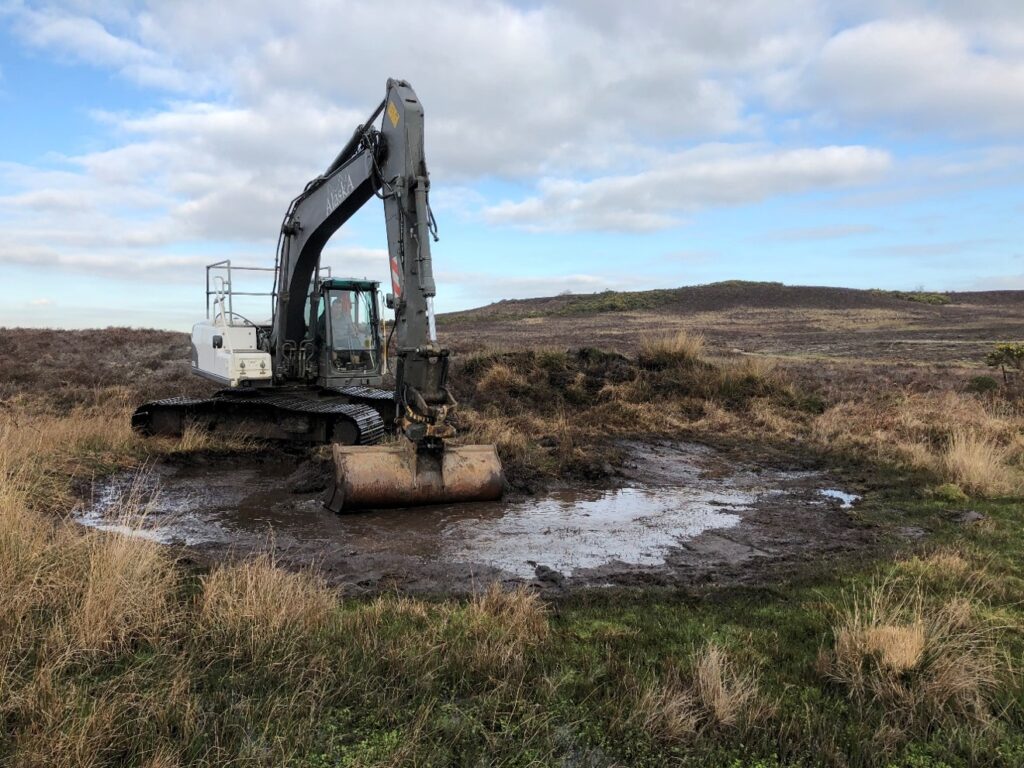
The second step was more drastic – the Fen Arm is wet, but not unconsolidated, and this made it relatively easy to bring in an excavator to create suitable wet hollows. We worked with Alaska Ecological Contracting, whose staff are experienced in carrying out suitably naturalistic groundworks in challenging conditions. Luckily for us, Freshwater Habitats Trust had already been working at Winfrith to increase the area of suitable habitat there and so were able to advise us. We decided on pools that were about 10m in diameter and up to 0.3m in depth with shallow sides. The aim was to provide a range of hydrological conditions and enough depth to retain some water in the centre year-round. The pools were roughly round, but with wavy edges to increase the variety of conditions and to blend into the landscape. Three were created upstream of the existing pond, and three downstream. As we were unsure how any interaction between the pools and the Fen Arm watercourse would affect water levels, we designed some to be “online”, so that the water would flow through them, while others were isolated from the channel.
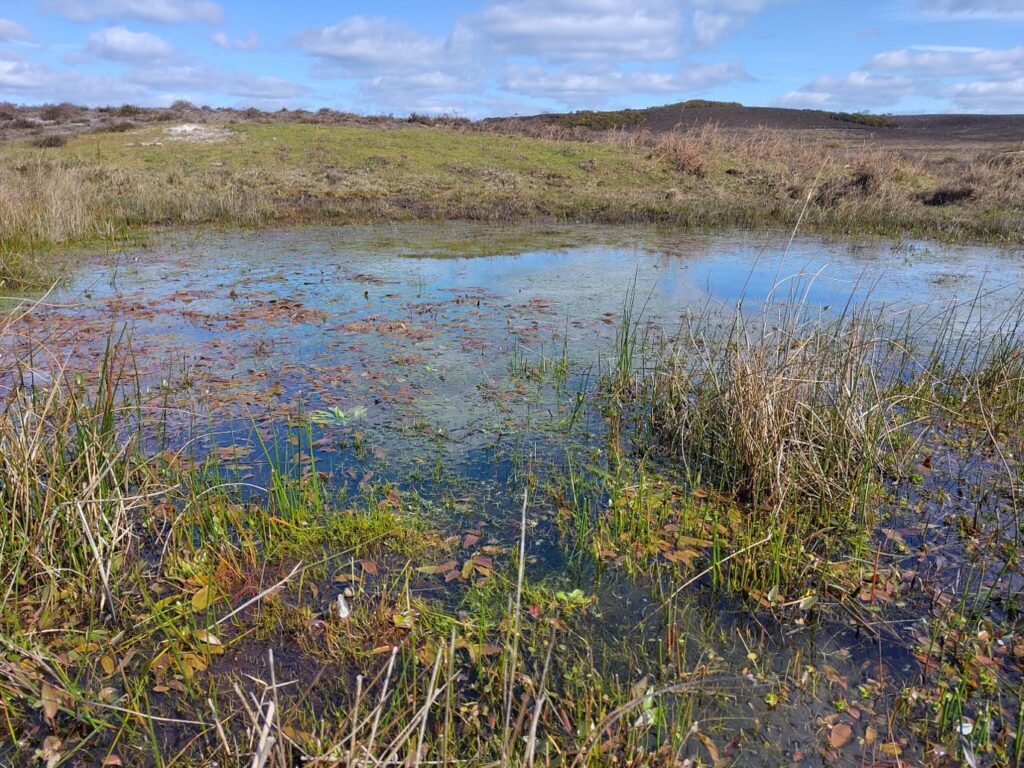
The hollows were created in early 2020 and filled with water even as they were being excavated. They looked a little raw to start with, but within a year had revegetated, and provided excellent habitat for a range both submerged and emergent plants with a suitably broad drawdown zone where the water retreated in summer. They attracted a variety of dragonflies and damselflies, and a Sand Lizard was once seen on the sandy mound of arisings on the bank. But no Pillwort. Over the ensuing years, the pools were visited regularly, including by members of the Purbeck Natural History Forum (PNHF), but there was never any sign of Pillwort.
However, visiting the Petty Whin around Easter has remained something of a tradition. This April saw us wandering along the Fen Arm looking for flashes of yellow. My companion was waylaid by the discovery of a Grass Eggar caterpillar and wanted to search for more. However, the charm of its gingery bristle soon wore off, and I veered off down to the pools to see how much water they were holding – and was amazed to see the tops of Pillwort fronds just emerging from the water! The PNHF volunteers mobilised and all pools have now been checked, with the result that Pillwort has now been recorded in several pools, both upstream and downstream of the original pool. It’s not clear why it has appeared now – although it is perhaps related to the particularly wet winter which saw the Fen Arm submerged for weeks. In any case, it is truly a delight to see the species back and in such numbers. Cattle grazing provides a perfect amount of disturbance, reducing the more dominant species and creating poached disturbed areas perfect for Pillwort. Provided that the water supply remains adequate, there seems no reason that the Pillwort should not flourish. But along with the PNHF volunteers, I will be keeping an eye, just to be sure.
Many people were involved in this project, including Aemelia Roe (NT), Andy Byfield, Chris Diek (RSPB), David Brown (NT), Lizzie Cooke (Plantlife), Naomi Ewald, Rick Bosson (Alaska) and their colleagues.