[ccfic]
By Paul Morton
In early 2024 a new craze started taking over those who liked to be out in the countryside. For many, the joy of watching nature or hiking amongst beautiful scenery started decades ago, and whilst bird sound may have played a role in the enjoyment of these past times, who was truly listening? Then, a few years ago an App emerged….Merlin. A tool for the general user to start learning what birds can be heard within the landscape people were visiting. Now thousands of newly enthused amateur naturalists wander around the English countryside, gaining a better understanding of what bird’s sound like, what birds are present and hopefully, learning the sounds and songs of different species. Perfect.
All of this is great, but if only it was that simple. You see, many birds across the UK, including right here in Purbeck, spend a huge amount of time listening, not only to each other, but to every other bird in the landscape.
A song bird doesn’t know it’s song straight away, it has to learn, refine and crystalise it before it has the desired effect. After a young song bird leaves the nest, it spends several months listening and learning, before very sheepishly practising a version of it’s own. This is called subsong, and to be honest, doesn’t sound anything like the finished article you’d expect for each species. During this period young birds are listening to other birds within the landscape and mimicking parts of other birds songs, all in the name of ‘practice’. After a few more months, and as the breeding season approaches, a bird will start performing plastic song. This is a ‘truer’ version of a species known repertoire, however, to bulk up the song and sound more impressive, many birds will still mimic and steal calls and phrases from other birds.
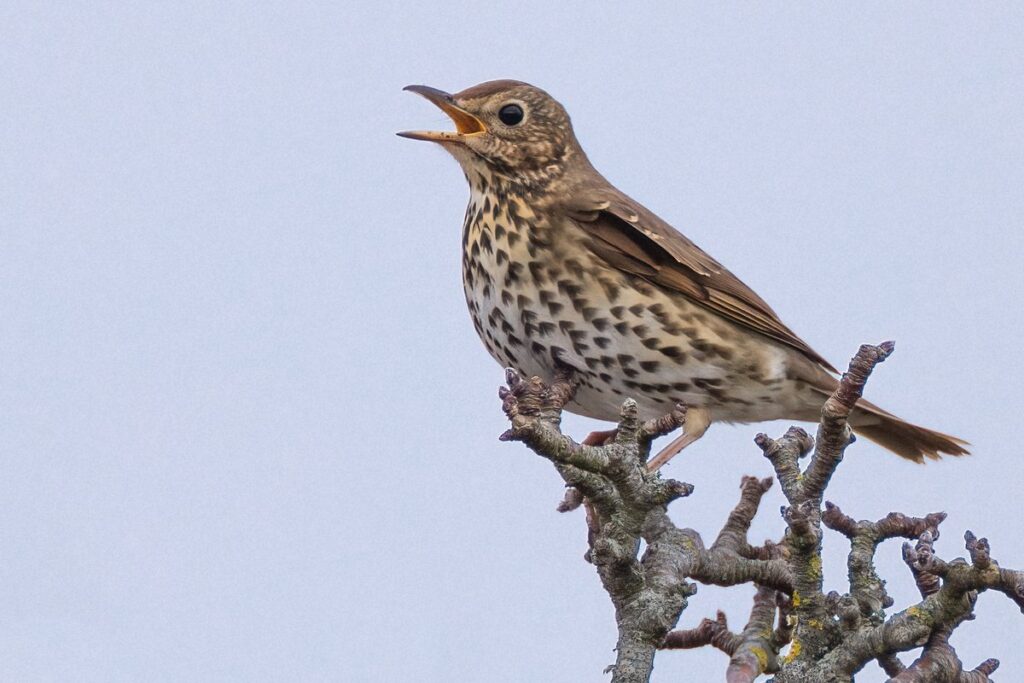
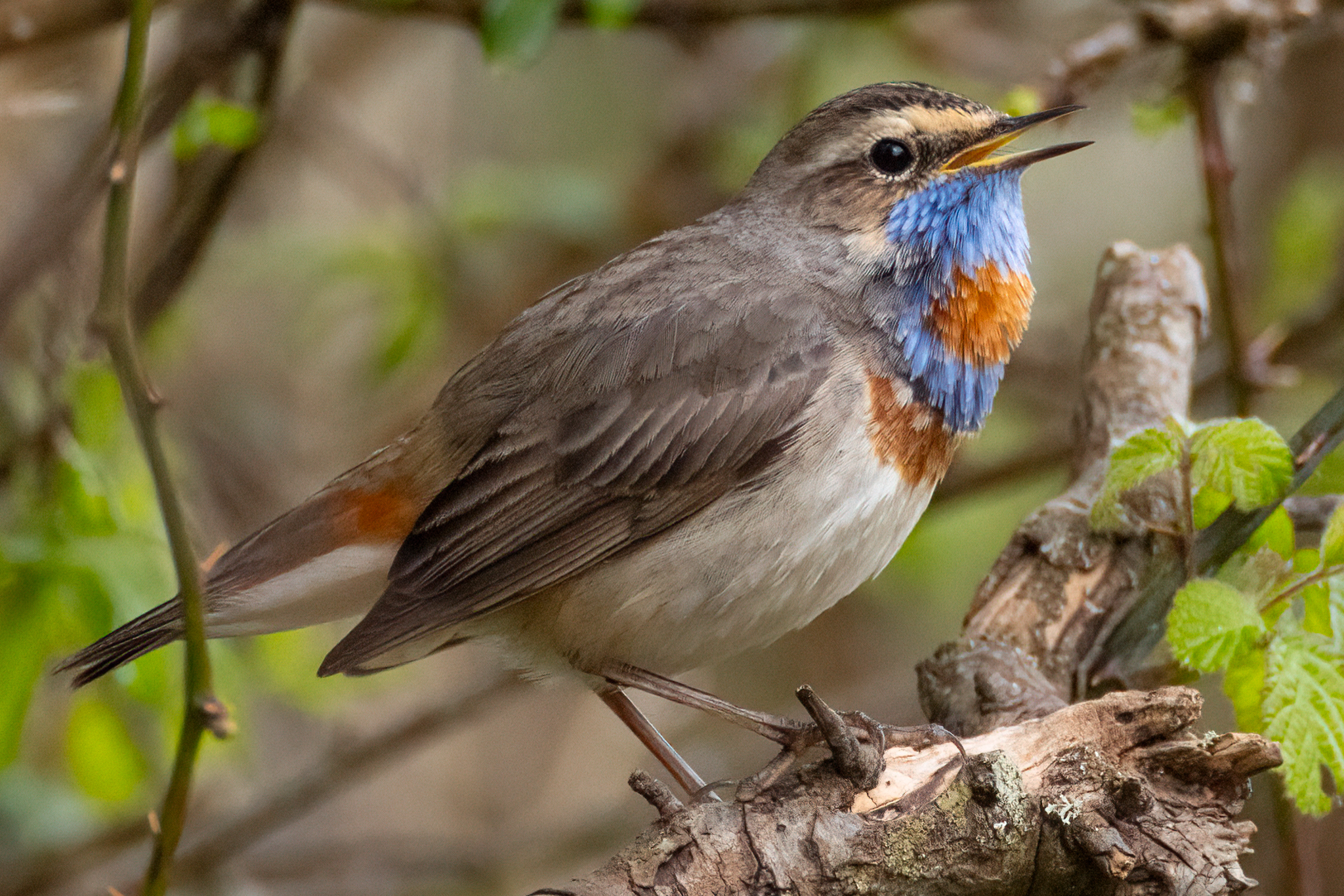
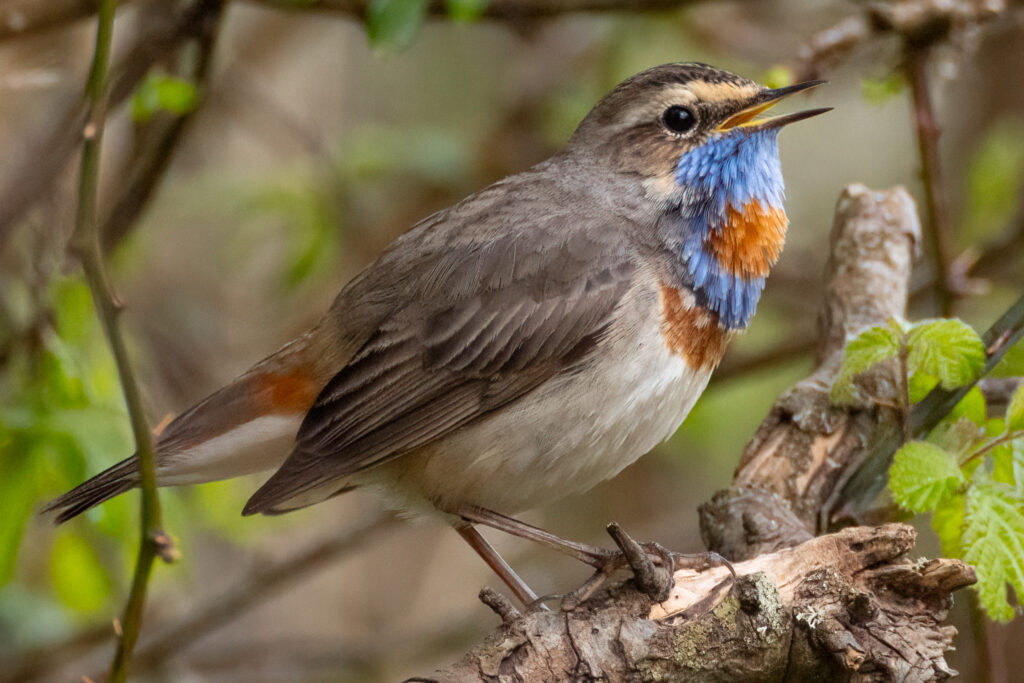
Across the Isle of Purbeck there are many great examples you can listen out for your self. Song Thrush is a classic. Here at Carey, close to where the Ospreys nest a mature, experienced Song Thrush has mastered the alarm call of an Osprey, and now includes it on a daily basis in the early spring as part of his rich repertoire. Redstart breed in small numbers across Wareham Forest and Poole Harbour, but if you’re lucky enough to find, and then hear one, you’ll notice that the very last phrase of a male’s song is a total rip off of multiple other species. Back in 2018 I remember sound recording one at RSPB Arne, and within the space of just a few minutes, the singing male had copied Tree Pipit, Coal Tit, House Sparrow, Green Sandpiper and even Nightjar flight calls! The recent Red-spotted Bluethroat at Swineham, a real local rarity was evolving it’s song for whole duration of it’s stay with us during March and April before he left. On most occasions it was performing plastic song, but having left a sound recorder in situ for a few days, I was amazed when analysing the recordings that within its song it was perfectly copying Crossbills, Swallows, Common and Green Sandpiper, Chaffinch, Goldfinch, Goldcrest and Waxwing! The latter it must have learnt up on its natal/breeding grounds in Northern Europe the previous summer/autumn before it made its way to us.
So, if Merlin has opened up this exciting new world of bird sound to you, then why not listen a little bit longer and harder to see if you can pick out the copy cats amongst our favourite feathered friends.